When a customer interacts with your online store, they’re piecing together a story about your brand. Every click, every page load, every email—it all adds up. That complete story, the sum of all their feelings and perceptions from the moment they discover you to the day they unbox their order (and beyond), is the ecommerce customer experience.
It’s not just about a single transaction. A great experience makes people feel seen, understood, and valued, which builds the kind of trust that keeps them coming back. A bad one? It sends them straight to your competition, no questions asked.
Defining the Modern Ecommerce Customer Experience
Let’s get practical. Think of your online store as a high-end restaurant. The food (your product) has to be excellent, of course. But that’s just one part of the meal. The total experience is what really matters. It starts with how easy it was to book a table (intuitive site navigation), continues with the host who greets you at the door (your homepage), and ends with paying the bill without any hassle (a frictionless checkout).
This “total experience” is the new battleground for ecommerce. It’s not enough to have a great product or a low price anymore. Customers now expect—and will gladly pay for—a smooth, personal, and memorable journey every time they shop.
Why It Is the New Competitive Advantage
In a sea of online stores, anyone can copy your products. Anyone can match your prices. What they can’t replicate is the unique, positive feeling a customer gets when they shop with you. A standout customer experience is what sets you apart, creating an emotional connection that turns a one-time buyer into a lifelong fan.
On the flip side, trust is incredibly fragile online. A single point of friction can destroy it in an instant. A page that takes too long to load, a checkout form that’s confusing, or a missing delivery confirmation can be all it takes to lose a sale and a customer for good.
The Financial Impact of a Poor Experience
Ignoring the customer journey isn’t just a missed opportunity; it’s a huge financial risk. The numbers don’t lie—customers are voting with their wallets, and they’re choosing brands that deliver a better experience.
Just how critical is it? Recent research is eye-opening. A whopping 52% of consumers say they’ve stopped buying from a brand because of bad product or service experiences. On top of that, another 29% walked away simply because of a poor customer experience, either online or in-store.
This tells us that modern shoppers have very little patience for brands that don’t meet their expectations. You can dive deeper into the data in PwC’s 2025 Customer Experience Survey.
Ultimately, putting money into a superior ecommerce customer experience isn’t just an expense. It’s the most reliable investment you can make for sustainable growth, repeat business, and a brand that people genuinely love.
Mapping Your Customer Journey Touchpoints
Your customer’s path from discovery to purchase isn’t a straight line. It’s more of a winding road with dozens of small interactions—we call these touchpoints—where you have a chance to either impress them or frustrate them. Every single one of these moments shapes their overall experience with your brand.
Think of it like planning the perfect road trip. The final destination is a completed purchase, but the journey involves many crucial stops: picking a spot on the map (Awareness), reading hotel reviews (Consideration), booking the room (Purchase), and getting that confirmation email (Post-Purchase). One bad stop, like a clunky booking website, can sour the whole trip.
Mapping these touchpoints lets you see your store through your customers’ eyes. It’s how you pinpoint where you’re shining and, more importantly, where you’re dropping the ball. To go deeper on this, you can explore the stages of the ecommerce customer journey and see how to optimize each step.
To get started, let’s break down the journey into its core stages, identifying the goal and key metrics for each.
Key Customer Journey Touchpoints and Optimization Goals
This table outlines the primary stages of the ecommerce customer journey. For each stage, we’ve defined the main objective you should be focused on and listed some common metrics to help you measure whether you’re hitting the mark.
| Journey Stage | Primary Goal | Key Metrics to Track |
|---|---|---|
| Awareness | Make a memorable and positive first impression. | Brand mentions, social media engagement, website traffic from new sources. |
| Consideration | Build trust and provide the information needed for a confident decision. | Time on page, product page views, “add to cart” rate, wishlist additions. |
| Purchase | Create a frictionless, fast, and secure transaction process. | Cart abandonment rate, conversion rate, average order value (AOV). |
| Post-Purchase | Turn a one-time buyer into a loyal, repeat customer. | Repeat purchase rate, customer lifetime value (CLV), support ticket volume. |
By tracking these metrics, you can get a much clearer picture of where your experience is strong and where it needs work.
Stage 1: The Awareness Phase
This is your brand’s first handshake. Long before anyone thinks about buying, the awareness stage is where they discover you exist. Your only job here is to make a great first impression that sticks.
Touchpoints in this stage are all about discovery:
- Social Media Posts and Ads: They stumble upon your sponsored post on Instagram or a video on TikTok.
- Search Engine Results: Your store pops up when they’re searching for a solution to a problem.
- Influencer Mentions: A creator they trust gives your product a shout-out. A great experience here might be a clever, high-quality ad that genuinely connects with their needs. A poor one? A broken link from a social post that dumps them on a “404 Not Found” page, killing trust before it even has a chance to form.
Stage 2: The Consideration Phase
Okay, they know who you are. Now they enter the consideration phase, where they’re actively weighing their options and deciding if your product is the one for them. Your goal is to give them all the information and social proof they need to feel confident hitting “add to cart.”
This is where your website’s performance is put to the test. Key touchpoints include:
- Homepage and Category Pages: How easy is it for them to browse and find what they’re looking for?
- Product Pages: Are your descriptions compelling, your photos top-notch, and your reviews easy to find?
- Customer Reviews and Q&A: What are actual customers saying about their experience? Picture a product page with detailed specs, a 360-degree view, and a video of the item in action. That’s a fantastic experience. Now, compare that to a page with one blurry photo and a vague description. The difference in a shopper’s confidence is huge.
Stage 3: The Purchase Phase
This is the moment of truth. They’ve decided to buy, but you haven’t closed the deal just yet. The purchase phase is all about making the transaction as smooth, fast, and secure as humanly possible. Any friction here is a certified conversion killer.
The most critical touchpoints are right at the finish line:
- The Shopping Cart: Can they easily edit quantities, see the full cost, and add a discount code?
- The Checkout Process: Are you forcing them to create an account or filling the screen with unnecessary fields?
- Payment and Shipping Options: Do you offer the familiar and trusted methods your customers prefer?
Stage 4: The Post-Purchase Phase
The customer experience doesn’t stop once the payment goes through. The post-purchase phase is your golden opportunity to turn that one-time buyer into a loyal fan. Here, your goal is to reassure them, keep them in the loop, and make them feel good about their decision.
Key touchpoints after the sale include:
- Order Confirmation Emails: An instant, clear confirmation that their order is in the system.
- Shipping and Delivery Notifications: Proactive updates that let them track their package’s journey.
- Product Unboxing: The physical experience of opening the package when it arrives.
- Customer Support and Returns: How painless is it to get help or send something back if it isn’t quite right? A simple, proactive shipping notification with a tracking link builds excitement. The alternative—radio silence after they’ve given you their money—creates anxiety and a flood of “Where is my order?” support emails.
How to Personalize the Shopping Experience
In a world overflowing with options, generic marketing just doesn’t cut it anymore. It’s noise. Personalization is what allows you to break through, turning a standard online visit into a real conversation. It’s about making each customer feel like you built the store just for them.
This goes way beyond just slotting their first name into an email. Real personalization means using customer data—what they’ve bought, what they’ve looked at, how they browse—to create interactions that are relevant and timely. When you get it right, the experience feels less like a transaction and more like a trusted relationship. You become their personal shopper, not just another digital catalog.
And customers are ready for it. A recent study found that nearly half of all buyers, including 40% of consumers, are happy to pay more for a better, more personalized experience.
Tailoring Product Recommendations and Content
The fastest way to personalize is to show customers products you already know they’ll love. This isn’t about a generic “you might also like” section. It’s about using smart algorithms and customer data to make predictions that are genuinely helpful.
A good recommendation engine is key here. It can analyze browsing behavior in real-time, changing what a customer sees on your homepage, category pages, and even within their search results. Your storefront essentially adapts to what that specific user wants in that moment.
Here are a few practical ways to put this into action:
- Onsite Recommendations: Add widgets like “Recently Viewed” or “Inspired by Your Browsing History” to keep products they’re interested in front and center.
- Email Campaigns: Send targeted emails showing off new arrivals in a category they’ve bought from before.
- Post-Purchase Follow-ups: Suggest products that complement what they just bought. Think a special cleaning kit for the leather shoes they just purchased. The customer’s journey has distinct stages, and personalization plays a different role in each one. This diagram breaks it down.
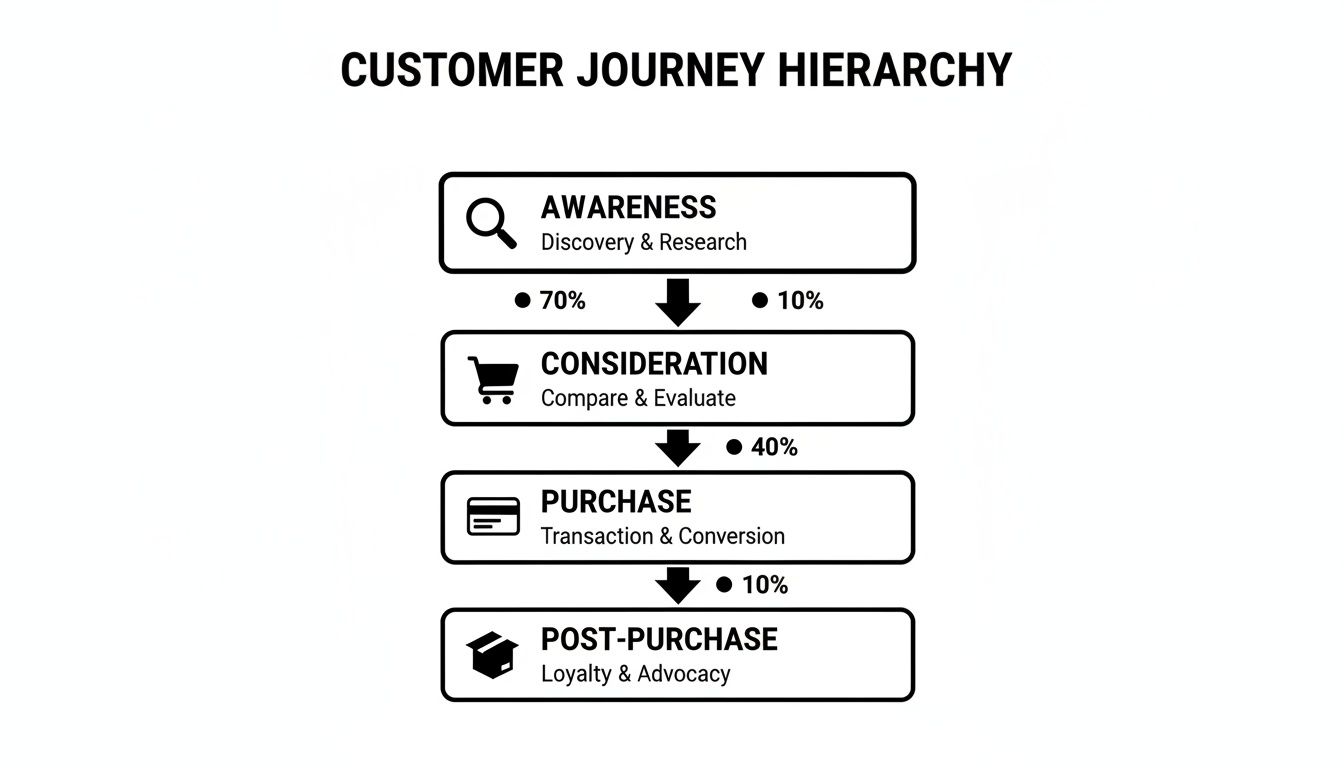
As you can see, while awareness gets people in the door, it’s during the consideration and purchase stages that a personalized touch can make all the difference in boosting your conversion rates.
Creating VIP Experiences with Custom Offers
Nothing makes a customer feel valued quite like an exclusive offer. That feeling of getting a special deal that isn’t for everyone is a powerful motivator for both loyalty and immediate sales. Blasting a generic 10% off coupon to your entire list feels like junk mail, but a unique offer sent to a specific group of customers feels like a genuine reward.
This is where specific tools can be a game-changer. For example, Shopify merchants can use apps like Checkout Links to build truly personalized checkout flows. Instead of just giving someone a code to remember, you can generate a direct link for your VIPs that automatically applies their discount and pre-fills their cart.
Imagine sending an email to your top 100 customers with a link that says, “Your exclusive 25% discount is ready—just click here to complete your order.” It’s frictionless, it feels exclusive, and it’s incredibly effective at making your best customers feel seen. This is the kind of detail that elevates a simple purchase into a memorable experience.
2. Nail the Checkout to Skyrocket Conversions

The checkout is the final hurdle in the customer’s journey. It’s the make-or-break moment where all your hard work on marketing and personalization pays off—or falls flat. This is the high-stakes finish line where even the slightest bit of friction can send a shopper running for the hills, leaving a sale just a few clicks from completion.
Think of it like the grand finale of a great show. If the performance was amazing but the exit is blocked, crowded, and confusing, that frustrating experience is what the audience will remember. Your goal is to engineer a checkout process so smooth and effortless that the customer barely even notices it happening.
Find and Eliminate Checkout Friction
The most common reasons for cart abandonment almost always boil down to two things: friction and unwelcome surprises. Customers have zero patience for a checkout that feels like an interrogation or a guessing game. By tackling these issues head-on, you can dramatically lift your conversion rate.
Keep an eye out for these top conversion killers:
- Forced Account Creation: Making a new customer create an account and password just to give you their money is a massive roadblock. Always, always offer a prominent guest checkout option.
- Surprise Costs: Unexpectedly high shipping fees, taxes, or other random charges that pop up at the last second are the #1 cause of abandonment. Be transparent with all costs from the very beginning.
- Long, Confusing Forms: Asking for a dozen pieces of information or spreading the process across five different pages creates fatigue and kills momentum. Keep it simple.
- Limited Payment Options: If you don’t offer trusted, easy options like PayPal, Apple Pay, or Google Pay, you’re practically inviting a huge chunk of your customers to shop elsewhere.
Digging into a battle-tested playbook, like a proven Amazon CRO strategy, can give you a framework for spotting and fixing these tiny points of friction that cost you big money.
Building a High-Converting Shopify Checkout
For Shopify merchants, optimizing the checkout means both streamlining the standard flow and using powerful tools to create clever shortcuts. The name of the game is reducing the number of clicks and decisions a customer has to make.
A clean, single-page design should be your baseline. Let customers see their order summary, enter shipping details, and pay—all without jumping through multiple hoops. And be sure to enable one-click options like Shop Pay for returning customers. For a deeper dive, check out these best practices for ecommerce checkout for more actionable tips.
Use Checkout Links to Create Instant Sales Funnels
Why make customers go through the standard “add to cart” journey when you can send them straight to the finish line? With a tool like Checkout Links, you can create direct paths to purchase for specific campaigns, completely bypassing the traditional shopping cart.
This approach is an absolute game-changer for:
- Social Media Ads: A “Shop Now” button on an Instagram story can link directly to a pre-filled checkout page with that exact product ready to go.
- Email and SMS Campaigns: Send your VIPs a link with their exclusive discount already applied. It’s a frictionless, one-click buying experience that makes them feel special.
- Abandoned Cart Recovery: Instead of just sending a sad reminder, give them a link that instantly rebuilds their cart, making it ridiculously easy to finish what they started. These dynamic links turn a passive marketing message into an active sales channel. By pre-filling carts, applying discounts automatically, and even using QR codes at in-person events, you remove every single barrier standing between your customer’s interest and their purchase. It’s a simple but incredibly powerful tactic that’s a cornerstone of any modern, high-converting e-commerce strategy.
3. Nail the Mobile Commerce Experience
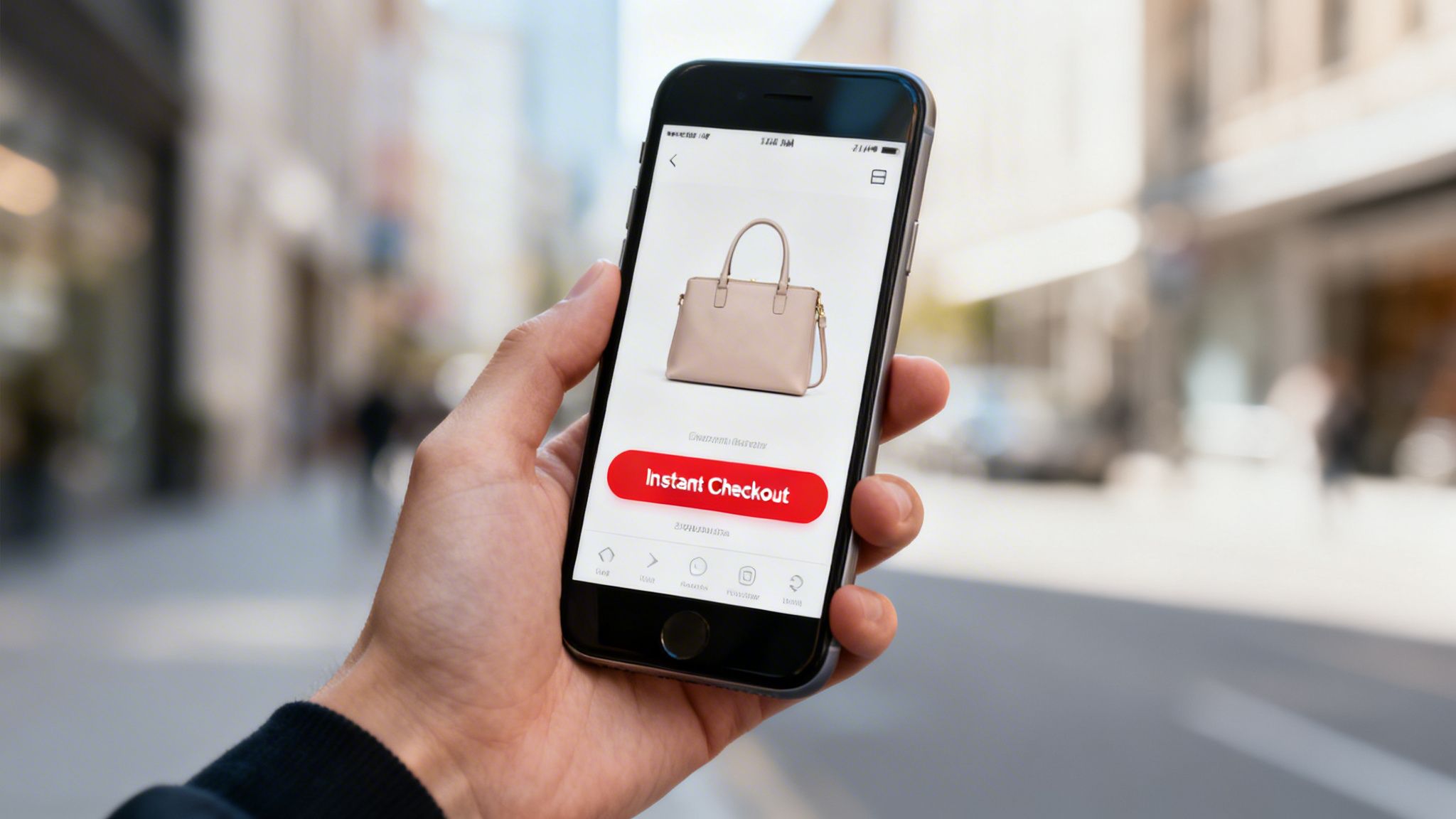
Let’s be honest: your customer’s first—and often only—interaction with your brand now happens on that little screen they carry everywhere. A “mobile-first” strategy isn’t some futuristic goal anymore; it’s table stakes for staying in business. The ecommerce customer experience is, for all intents and purposes, a mobile experience.
Shopping on a phone comes with its own unique set of rules. You’re dealing with tiny screens, thumb-based navigation, and attention spans that can be measured in seconds. There is absolutely zero room for friction. Just shrinking your desktop site to fit a phone is a guaranteed conversion killer, creating a clumsy, frustrating mess that sends shoppers running.
To win on mobile, you have to design for it. This means thinking about speed, simplicity, and getting the user what they want now. Every single tap, scroll, and page load has to feel effortless.
Make It Fast, Make It Simple
On mobile, speed isn’t just a nice-to-have feature. It’s the entire foundation of the experience. Shoppers expect pages to load instantly, and a delay of even one second can be enough to make them bounce for good. Every image needs to be compressed, every script minimized, and every element built for a quick delivery.
But it’s not just about raw technical speed. The perceived speed of your site is just as crucial. This comes down to creating an intuitive, touch-friendly navigation system that feels natural from the second someone lands on your page.
- Big, Obvious Buttons: Make sure every clickable element is “thumb-friendly.” Give them plenty of space to prevent those annoying accidental taps.
- Decluttered Layouts: Get rid of anything that isn’t absolutely essential. Use clean product grids and collapsible menus to keep the focus where it belongs: on your products.
- Intuitive Navigation: A “sticky” header with a clear search bar and cart icon is a must. It lets people get around your store without having to scroll all the way back to the top. By obsessing over these details, you create a mobile store that feels responsive and easy to use, respecting your customer’s time and their limited screen space.
Closing the Mobile Conversion Gap
Mobile commerce has completely changed how people shop, but a strange gap still exists between traffic and actual sales. While mobile is on track to account for nearly 59% of all online retail sales in 2025, the conversion rates tell a different story. Data shows that tablets convert at 3.1% and desktops at 2.8%, while smartphones lag behind at just 2.3%. This highlights a massive opportunity for brands that get mobile right. You can dive deeper into these trends with these global ecommerce statistics.
So why the gap? It’s often because navigating a full site and slogging through a traditional checkout on a phone is still a pain. Customers will browse on their phones but then wait until they’re on a desktop to buy—or worse, they just forget about it completely. This is where you can get clever to close that loop.
Using Checkout Links for Mobile-First Campaigns
One of the most effective tools for elevating the mobile experience is the direct-to-checkout link. These are tailor-made for the fast-paced, fragmented world of mobile, letting you skip the clunky navigation entirely.
Think about it. Instead of sending someone from an Instagram Story to your homepage and just hoping they find the right product, you can send them straight to a pre-filled checkout page. It’s a simple shortcut that’s a total game-changer for mobile marketing.
Here are a few powerful ways to use them:
- Social Media Stories: A “swipe up” link on an Instagram Story can take a shopper directly to a checkout page with that featured product already in the cart.
- SMS Campaigns: Send a text to your subscribers with a checkout link that has their exclusive discount automatically applied. It feels like a VIP, one-tap buying experience.
- Influencer Marketing: Give your influencers direct checkout links for specific products. This makes it incredibly easy for their followers to buy the second they feel inspired. By creating these instant purchase paths, you’re speaking the mobile user’s language. You remove every possible roadblock, turning a flicker of interest into an immediate sale and delivering a genuinely seamless experience.
Building Loyalty After the Purchase Is Made
https://www.youtube.com/embed/XyNPcc93VhY
That moment a customer hits “buy” isn’t the finish line. It’s actually the starting gun for the most important part of their journey with you—the part where a single transaction can blossom into a long-term relationship. The post-purchase experience is your chance to turn a first-time buyer into a loyal fan who comes back again and again.
Too many brands pour all their energy into getting the sale, only to go silent the second the payment clears. That silence creates a void of anxiety and instantly starts to chip away at the trust you just earned. A truly great ecommerce customer experience shines in these moments, reassuring customers and making them feel cared for long after they’ve clicked “complete order.”
Master Proactive Communication
The biggest question echoing in a customer’s mind after a purchase? “Where is my stuff?” Don’t make them hunt for the answer. Getting ahead of this with a proactive communication strategy is your secret weapon. It replaces worry with excitement.
This just means sending the right updates at the right time. Think of it as a friendly tap on the shoulder:
- Instant Order Confirmation: An immediate email or SMS that says, “We got it! Your order is confirmed.”
- Shipping Notification: The “It’s on the way!” message, complete with a tracking link they can actually use.
- Delivery Updates: Simple notifications for key milestones, like when the package is out for delivery or if there’s an unexpected hiccup. This steady stream of information keeps customers in the loop and dramatically cuts down on “Where is my order?” support tickets. Your team will thank you.
Design a Hassle-Free Returns Process
Let’s be honest, nobody enjoys making a return. But a clunky, confusing, or restrictive returns process can turn a minor disappointment into a reason to never shop with you again. On the flip side, a smooth and easy return policy can build an incredible amount of trust.
The goal is to make it painless. A self-service returns portal is a game-changer here. Letting customers start a return, print a label, and see its status on their own time empowers them and shows that you stand by your products. It turns a potential negative into a real brand-building moment.
Offer Responsive Multi-Channel Support
Even with the best systems, questions will pop up. When they do, your support needs to be easy to find, genuinely helpful, and quick. Today’s customers expect to reach you on their terms—whether that’s via live chat, email, a DM on social media, or even a phone call.
Great support is about more than just closing tickets; it’s about making people feel heard and valued. Make sure your team has the knowledge and authority to solve problems without a ton of back-and-forth. One fantastic chat with a helpful support agent can completely turn around a frustrating situation and lock in a customer’s loyalty for years to come.
Frequently Asked Questions
Got questions? You’re not alone. When you’re focused on building a brand people genuinely love, it’s natural to have a few things you want to clear up. Here are some of the most common questions we hear from merchants just like you.
What’s the Single Most Important Part of the Ecommerce Customer Experience?
If you had to put all your energy into just one thing, make it the checkout process. Every marketing campaign, every social media post, every beautiful product photo—it all leads to this one moment. It’s the final handshake where a browser becomes a customer.
A clunky, slow, or confusing checkout is the fastest way to lose a sale you worked so hard to get. Nailing this part of the experience delivers the biggest and most immediate lift to your conversion rates. It’s the highest-impact place to focus your efforts.
How Can I Personalize the Customer Experience on a Tight Budget?
Personalization sounds expensive, but it doesn’t have to be. The best place to start is with the data you already have sitting in your Shopify store. A few smart, simple tactics can make a customer feel seen without costing you a dime in new software.
For example, you could:
- Segment your email list based on what people have bought before. Someone who bought coffee beans probably wants to hear about your new roast, not your tea collection.
- Automate a simple follow-up email after a purchase. Ask for a review or suggest a product that goes well with what they just bought. It shows you’re thinking about them beyond the sale.
- Reward loyalty with a surprise. A small, unexpected discount code sent to a repeat customer can feel more special than a huge, generic sale.
What Are the Best Metrics for Tracking Customer Experience?
You can’t improve what you don’t measure, but tracking everything is just noise. To get a clear picture of how you’re doing, you need to look at a few key numbers that, together, tell the whole story.
Think of it as your customer experience dashboard. You’ll want to keep an eye on:
- Conversion Rate: The classic. Are the changes you’re making actually leading to more sales?
- Cart Abandonment Rate: This is your friction detector. If this number is high, something in your checkout is going wrong.
- Customer Lifetime Value (CLV): This is the long game. It tells you if you’re building a brand that keeps people coming back for more over time.
- Repeat Purchase Rate: This one is simple but powerful. Are customers making a second, third, or fourth purchase? That’s a huge sign of a great experience. And don’t forget to actually listen to your customers. Keep an eye on your reviews and support tickets. The raw, unfiltered feedback you get there is priceless.
Ready to build a checkout experience that converts? Checkout Links gives Shopify merchants the power to create personalized buying journeys that turn clicks into sales in an instant. Create your first dynamic checkout link with Checkout Links