Email marketing remains a cornerstone for Shopify merchants, consistently delivering one of the highest returns on investment in e-commerce. However, achieving this ROI requires more than just sending sporadic newsletters. The real power lies in deploying strategic, targeted, and automated campaigns that connect with customers at critical moments in their buying journey. Generic blasts no longer cut it; success hinges on personalization, precise timing, and a frictionless path to purchase.
This guide moves beyond generic advice to provide a comprehensive playbook of high-performing email campaigns examples. We will dissect 10 essential campaign types, offering a complete strategic blueprint for each. You won’t just see what to send; you’ll understand the underlying strategy and how to execute it effectively on your Shopify store. Each example is designed to be a replicable model, complete with specific goals, segmentation tactics, and actionable copy templates.
We will also focus on a crucial, often-overlooked tactic: using dynamic Checkout Links to create seamless, high-converting customer experiences. From welcoming new subscribers and recovering abandoned carts to re-engaging lapsed customers and rewarding your VIPs, you will gain a clear roadmap. Inside, you’ll find:
- Actionable Templates: Ready-to-adapt subject lines and body copy.
- Strategic Breakdowns: The “why” behind each campaign’s success.
- A/B Testing Ideas: Specific variables to test for optimizing performance.
- Key KPIs: The exact metrics to track to measure your success. This collection of email campaigns examples will equip you with the tools to build a sophisticated email marketing engine that drives sales, fosters loyalty, and maximizes customer lifetime value.
1. Welcome Series Email Campaigns
A welcome series is an automated sequence of emails sent to new subscribers immediately after they join your list. This is your first, best chance to make a strong impression, introduce your brand story, and guide a potential customer toward their first purchase. For Shopify merchants, this is a cornerstone of any successful email marketing strategy, boasting an average open rate of over 50%, significantly higher than standard campaigns.
These campaigns transform a simple email signup into a guided brand introduction. By sending a series of 3-5 emails over a week or two, you nurture the relationship, build trust, and demonstrate value beyond just selling products. This approach is fundamental among high-performing email campaigns examples because it capitalizes on the moment of peak interest when a user has just subscribed.
Strategic Breakdown
- Goal: Convert new subscribers into first-time customers and build brand affinity.
- Target Audience: New email subscribers who have not yet made a purchase.
- Key Insight: New subscribers are highly engaged. A welcome series moves them from passive interest to active consideration by systematically showcasing your brand’s value, social proof, and unique selling propositions.
Actionable Blueprint & Tactics
Subject Line Options:
- Email 1: “Welcome to [Your Brand]! Here’s 15% off to get started.”
- Email 2: “So, what makes [Your Brand] different?”
- Email 3: “Our best-sellers are waiting for you…” Body Copy & Checkout Links: The first email should deliver the promised incentive, like a discount. Use a dynamic Checkout Link to pre-apply the discount. For example: “Welcome to the family! Click here to claim your exclusive 15% discount on your first order. We’ve already applied it for you.” The link takes them directly to a pre-filled cart, minimizing friction.
Implementation Steps:
- Trigger: Set the automation to start immediately after a user subscribes to your email list.
- Email 1 (0 hours): Send a warm welcome, deliver the incentive with a Checkout Link, and introduce your brand’s core mission.
- Email 2 (2 days): Share your brand story or highlight your most popular product categories.
- Email 3 (4 days): Feature customer testimonials or user-generated content to build social proof.
- Email 4 (7 days): Create urgency with a final reminder that their welcome offer is expiring.
2. Cart Abandonment Recovery Campaigns
A cart abandonment recovery campaign is an automated email sequence sent to shoppers who add products to their cart but leave without completing the purchase. This is arguably the highest ROI email automation for any e-commerce store, as it targets customers with clear purchase intent. For Shopify merchants, recovering even a small fraction of these potentially lost sales can significantly boost revenue, with data showing that a well-crafted series can win back up to 20% of abandoned carts.
These campaigns work by re-engaging distracted or hesitant shoppers at critical intervals after they leave your site. By sending a timely, helpful reminder, you can overcome common checkout barriers like unexpected shipping costs, technical issues, or simple distraction. This strategy is one of the most powerful email campaigns examples because it directly addresses a multi-trillion-dollar problem and provides an immediate, measurable impact on your bottom line.
Strategic Breakdown
- Goal: Recover lost sales by bringing high-intent shoppers back to complete their checkout.
- Target Audience: Visitors who have added at least one item to their cart but have not completed the purchase.
- Key Insight: Shoppers abandon carts for many reasons, but their initial interest was high. A strategic email sequence that removes friction, builds confidence with social proof, and creates urgency can effectively guide them back to finalize their order.
Actionable Blueprint & Tactics
Subject Line Options:
- Email 1: “Did you forget something? Your cart is waiting.”
- Email 2: “Your [Product Name] is selling fast!”
- Email 3: “Complete your order now for 10% off.” Body Copy & Checkout Links: The first email should be a simple reminder, displaying the exact items left behind. Use a Checkout Link that takes the shopper directly back to their pre-populated cart. For example: “It looks like you left a few things behind. Ready to complete your order? We saved your cart for you.” Including customer reviews for the abandoned items can also help build trust. For a deeper dive into crafting these messages, explore our guide on cart abandonment email strategies.
https://www.youtube.com/embed/aL-u8UYzLco
Implementation Steps:
- Trigger: Set the automation to start when a known user adds a product to their cart but does not complete the checkout within a set time (e.g., 30 minutes).
- Email 1 (30 mins - 1 hour): Send a gentle, customer-service-oriented reminder with product images and a direct link to the cart.
- Email 2 (4-24 hours): Introduce mild urgency or scarcity, such as “Items in your cart are selling out” or “Only 2 left in stock.”
- Email 3 (24-48 hours): Offer a small incentive like a 10% discount or free shipping. Apply this directly using a dynamic Checkout Link to minimize friction.
3. Flash Sale and Limited-Time Offer Campaigns
Flash sale campaigns are high-urgency, time-sensitive promotions designed to generate a significant spike in sales over a short period, typically 24-72 hours. This tactic leverages the psychological principle of FOMO (fear of missing out), compelling subscribers to act quickly before the deal disappears. For Shopify merchants, these campaigns are incredibly effective for clearing inventory, re-engaging dormant customers, and driving immediate revenue.
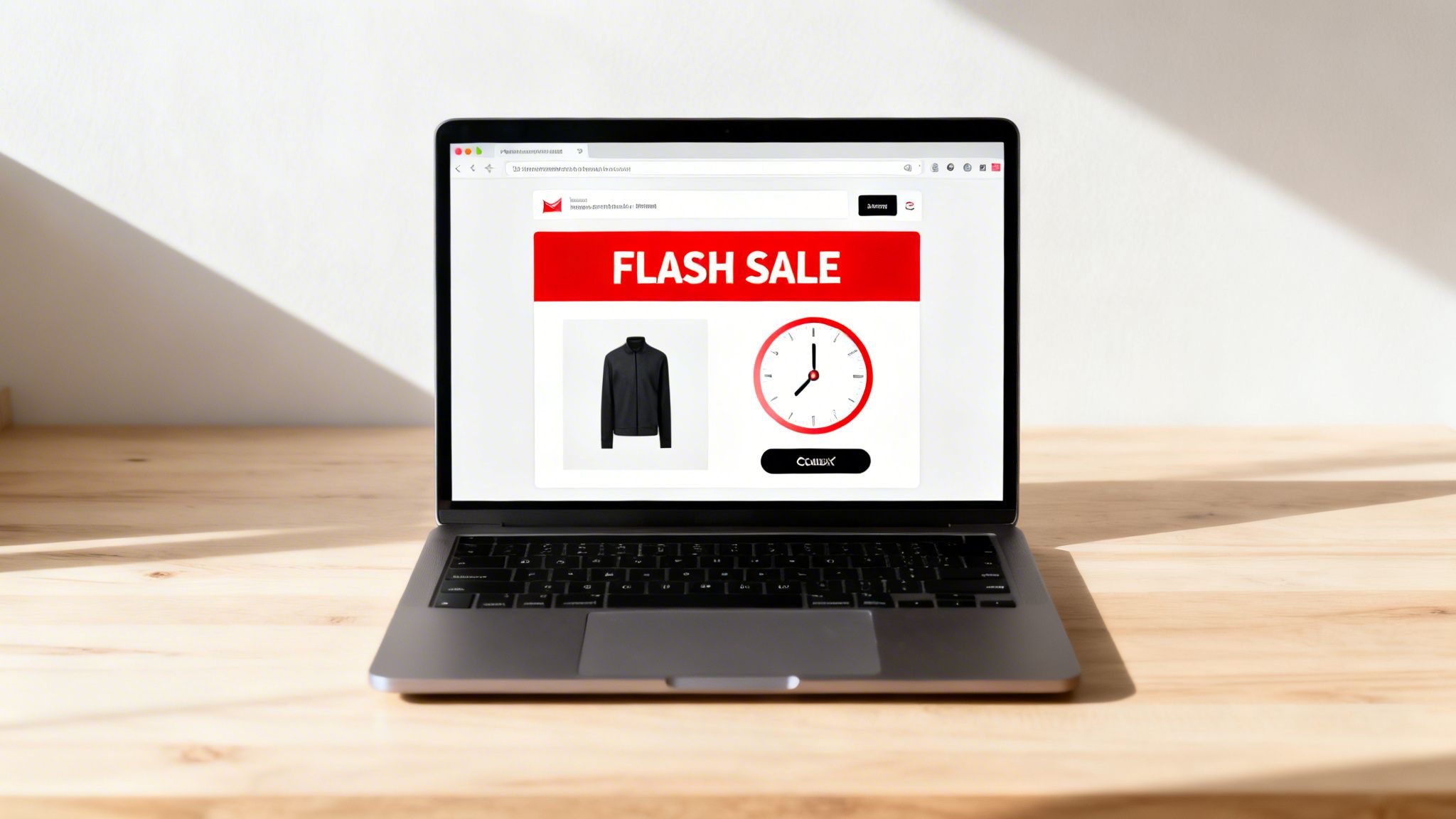
The power of these email campaigns examples lies in their focused, high-impact nature. By creating a compressed timeline, brands like Amazon with its Prime Day and Ulta Beauty with its 21 Days of Beauty have turned limited-time offers into major retail events. The key is to make the offer feel exclusive and unmissable, transforming passive browsing into decisive purchasing.
Strategic Breakdown
- Goal: Drive immediate sales, clear excess inventory, and re-engage inactive customers.
- Target Audience: All subscribers, with segments for VIP early access and inactive customers.
- Key Insight: Urgency is a powerful motivator. A strict deadline combined with a compelling offer bypasses the typical customer consideration phase, leading to impulse purchases and immediate revenue lift.
Actionable Blueprint & Tactics
Subject Line Options:
- Teaser: “It’s coming… Our biggest flash sale of the season.”
- Launch: “⚡️ FLASH SALE LIVE! 40% Off EVERYTHING for 24 Hours.”
- Final Reminder: “Last Chance: Flash Sale Ends in 3 Hours!” Body Copy & Checkout Links: The email body must be direct and action-oriented. Embed a live countdown timer to visually reinforce urgency. Use a Checkout Link with a scheduled discount that automatically activates and expires with the sale. For example: “Time is running out! Our 40% OFF flash sale ends tonight. Click here to shop now before it’s too late. The discount is automatically applied at checkout.”
Implementation Steps:
- Trigger (Manual Send): Schedule a multi-email sequence for the sale duration.
- Email 1 (24-48 hours before): Send a teaser email to build anticipation.
- Email 2 (Sale Launch): Announce the sale is live. Send to VIPs 1-2 hours early, then to the general list.
- Email 3 (Mid-Sale): Send a reminder about 12 hours in, highlighting popular items.
- Email 4 (Final Hours): Send a “last chance” email 3-4 hours before the sale ends to create final urgency.
4. Post-Purchase and Order Confirmation Campaigns
A post-purchase campaign goes beyond a simple transactional receipt. It’s a sequence of automated emails sent immediately after a customer buys something, designed to enhance their experience, build loyalty, and generate the next sale. Instead of treating the order confirmation as the end of the conversation, smart Shopify merchants use it as the beginning of the next one.
These campaigns are crucial because they engage customers when they are most excited about your brand. By providing value like care tips, product education, and personalized recommendations, you reinforce their purchase decision and build lasting trust. This strategy is a staple in high-impact email campaigns examples because it transforms a one-time buyer into a loyal, repeat customer, significantly boosting lifetime value.
Strategic Breakdown
- Goal: Increase customer lifetime value, drive repeat purchases, and gather social proof.
- Target Audience: Recent first-time and repeat customers.
- Key Insight: The moment after a purchase is a peak engagement window. Customers are highly receptive to brand communication, making it the perfect time to upsell complementary products, provide value, and ask for a review.
Actionable Blueprint & Tactics
Subject Line Options:
- Email 1: “Your [Your Brand] order #[Order Number] is confirmed!”
- Email 2: “Get the most out of your new [Product Name].”
- Email 3: “How are you liking your [Product Name]? Share your thoughts!” Body Copy & Checkout Links: The first email confirms the order and sets expectations for shipping. The second email can add value and drive the next purchase. For example: “We hope you’re loving your new sneakers! Customers who bought them also love our performance socks. Click here to add a pair to your next order with an exclusive 10% discount.” This Checkout Link takes them directly to a pre-filled cart with the recommended item and discount.
Implementation Steps:
- Trigger: Set the automation to start immediately after an order is completed.
- Email 1 (0 hours): Send the order confirmation. Include a thank you message, order summary, and shipping information.
- Email 2 (3 days): Provide product care or usage tips. Recommend a complementary product with a personalized Checkout Link.
- Email 3 (10 days): Request a product review, potentially offering a small incentive for their feedback.
- Email 4 (21 days): Introduce your loyalty program or offer an exclusive discount to encourage the next purchase.
5. Re-Engagement and Win-Back Campaigns
A re-engagement or win-back campaign is an automated email sequence sent to inactive subscribers or lapsed customers who haven’t engaged or purchased in a specific period. Instead of letting these contacts go cold, this strategy aims to reignite their interest, remind them of your brand’s value, and prevent list churn. For Shopify merchants, it’s a cost-effective way to retain hard-won customers, as acquiring a new customer can be five times more expensive than retaining an existing one.
These campaigns strategically reintroduce your brand to an audience that has disengaged. By sending a carefully timed series of emails, you can remind them why they subscribed in the first place, showcase new products, and offer a compelling incentive to return. This type of automated flow is one of the most powerful email campaigns examples because it directly recovers revenue that would otherwise be lost.
Strategic Breakdown
- Goal: Reactivate dormant subscribers and lapsed customers to drive repeat purchases and reduce churn.
- Target Audience: Customers who have not made a purchase in a set timeframe (e.g., 60, 90, or 180 days) or subscribers who haven’t opened an email.
- Key Insight: Inactive customers already have brand familiarity. A personalized, high-value offer can be the perfect nudge to bring them back, reminding them of the value they once saw in your brand.
Actionable Blueprint & Tactics
Subject Line Options:
- Email 1: “We miss you! Here’s a little something from us.”
- Email 2: “Is this goodbye? See what you’ve missed at [Your Brand].”
- Email 3: “Final Offer: Here’s 20% off to win you back.” Body Copy & Checkout Links: The first email should be a gentle nudge, perhaps highlighting what’s new. If that doesn’t work, follow up with a stronger offer using a Checkout Link. For example: “It’s been a while! To welcome you back, we’re giving you 20% off your next order. Click here to shop now with your discount automatically applied.” This direct link to a pre-discounted checkout makes returning effortless.
Implementation Steps:
- Trigger: Create a segment of customers who haven’t purchased in 90 days. Set this segment as the trigger for your automation.
- Email 1 (Day 90): Send a “We miss you” email. Remind them of your brand’s value and showcase best-sellers or new arrivals.
- Email 2 (Day 97): If they still haven’t purchased, send a stronger incentive like a 15% discount.
- Email 3 (Day 105): Create urgency with a final, slightly larger offer (e.g., 20% off). Use a clear “last chance” message.
- List Cleanup: If a user doesn’t engage with the entire series, consider suppressing them from future campaigns to protect your sender reputation.
6. Personalized Product Recommendation Campaigns
A personalized product recommendation campaign uses customer data, like browsing history and past purchases, to send emails with tailored product suggestions. Instead of a one-size-fits-all approach, these campaigns deliver individualized content that resonates with each subscriber’s unique interests. For Shopify merchants, this strategy is a powerhouse for driving repeat purchases and increasing customer lifetime value.
These data-driven campaigns, popularized by giants like Amazon, transform the inbox into a personal shopping assistant. By leveraging AI and customer segmentation, you can show users exactly what they are likely to want next. This level of personalization makes these some of the most effective email campaigns examples because they meet the customer’s needs proactively, boosting both engagement and revenue.
Strategic Breakdown
- Goal: Drive repeat purchases and increase average order value by showcasing highly relevant products.
- Target Audience: Existing customers with a purchase or browsing history.
- Key Insight: Customers are far more likely to engage with and purchase products that are relevant to their known preferences. Personalization cuts through the noise and makes the shopping experience feel curated and frictionless.
Actionable Blueprint & Tactics
Subject Line Options:
- Email 1: “Just for you, [Customer Name]: Our latest picks.”
- Email 2: “Since you liked [Previous Purchase], you’ll love this…”
- Email 3: “Top recommendations based on your recent activity.” Body Copy & Checkout Links: The email body should feature a clean grid or list of recommended products. Each product should have a direct call-to-action. Use a dynamic Checkout Link for each item: “See something you like? Click here to buy the [Product Name] now.” This link takes the customer directly to a pre-filled checkout, making the purchase effortless.
Implementation Steps:
- Trigger: Set up automated triggers based on customer behavior, such as completing a purchase or viewing a specific product category multiple times.
- Email 1 (Post-Purchase): A week after a purchase, send an email recommending complementary products.
- Email 2 (Browse Abandonment): A day after a user browses but doesn’t buy, send an email featuring that item and similar products.
- Email 3 (Monthly Picks): Send a monthly roundup of new arrivals and popular items from the customer’s favorite categories.
- Segmentation: Segment your audience by purchase frequency, category interest, or browsing behavior to refine recommendations further.
7. Educational Content and Newsletter Campaigns
Educational content and newsletter campaigns shift the focus from direct selling to providing genuine value. These campaigns deliver industry insights, how-to guides, and helpful tips directly to a subscriber’s inbox, establishing your brand as a trusted authority. This approach builds long-term relationships and keeps your brand top-of-mind, so when a subscriber is ready to buy, you are their first choice.
Instead of a hard sell, these campaigns nurture leads by solving their problems and answering their questions. For Shopify merchants, this strategy involves creating content that naturally integrates product mentions. A guide on “5 Ways to Style a Scarf for Fall” can seamlessly feature your products, making this one of the most effective long-term email campaigns examples for fostering loyalty and driving organic sales.
Strategic Breakdown
- Goal: Build brand authority, foster long-term customer relationships, and educate subscribers to create informed buyers.
- Target Audience: All segments of your email list, from new subscribers to loyal customers seeking more value.
- Key Insight: Customers are more likely to buy from a brand they trust and see as an expert. Providing consistent, high-quality educational content builds that trust and makes promotional messages more effective when they are sent.
Actionable Blueprint & Tactics
Subject Line Options:
- How-To: “Your Ultimate Guide to [Solving a Common Problem]”
- Listicle: “5 Mistakes to Avoid When [Related Activity]”
- Insider Tips: “Exclusive: The Pro’s Secret to [Achieving Desired Outcome]” Body Copy & Checkout Links: The body copy should prioritize value. For a skincare brand, an email about building a morning routine could explain the purpose of each step. You can then feature a relevant product: “For a Vitamin C serum that absorbs quickly, our Radiance Booster is a customer favorite. Try it today with this one-click link.” A Checkout Link here sends them directly to a pre-filled cart with that serum.
Implementation Steps:
- Content Calendar: Plan your newsletter topics a month in advance, aligning them with seasonal trends, holidays, or product launches.
- Email 1 (Week 1): Send a “how-to” guide that solves a common customer pain point, subtly featuring one or two key products.
- Email 2 (Week 2): Share a curated list of tips or industry news. For example, “This week’s top 3 trends in sustainable fashion.”
- Email 3 (Week 3): Showcase a customer success story or case study that demonstrates your product’s value in a real-world scenario.
- Email 4 (Week 4): Send a content roundup or a “most popular” digest from your blog to reinforce your expertise and drive traffic.
8. Segmented and Behavioral Trigger Email Campaigns
Behavioral trigger campaigns are sophisticated, automated emails sent in response to specific customer actions, not on a fixed schedule. These campaigns leverage deep customer data like purchase history, browsing behavior, and engagement levels to deliver hyper-relevant messages at the exact moment of intent. For Shopify merchants, this is a powerful way to personalize the customer journey at scale.
These automated workflows move beyond generic batch-and-blast emails, creating a dynamic conversation with each customer. Instead of sending the same promotion to everyone, you can send a ‘browsed category’ reminder or a cross-sell offer based on a recent purchase. This level of personalization makes behavioral triggers one of the most effective types of email campaigns examples, driving higher engagement and conversion rates.
Strategic Breakdown
- Goal: Increase conversions and customer lifetime value by sending highly relevant, timely messages based on user behavior.
- Target Audience: Specific customer segments defined by their actions (e.g., viewed a product, made a purchase, became inactive).
- Key Insight: Customers are most receptive to marketing when it directly relates to an action they just took. Triggered emails capitalize on these moments of high intent, delivering the right message at the right time to guide them toward the next step.
Actionable Blueprint & Tactics
Subject Line Options:
- Browse Abandonment: “Still thinking about [Product Category]?”
- Post-Purchase Cross-Sell: “The perfect match for your new [Product Name].”
- Re-engagement: “A special offer just for you, [Customer Name].” Body Copy & Checkout Links: For a cross-sell campaign, the copy should be helpful and contextual. For instance: “We saw you recently purchased our best-selling coffee beans. Many customers find our AeroPress brewer enhances the flavor. Click here to add it to your next order with an exclusive 10% discount.” The Checkout Link can take them to a cart pre-filled with the recommended product and the applied discount.
Implementation Steps:
- Trigger: Define the user action that initiates the workflow (e.g., “Placed Order” where “Item equals [Product A]”).
- Email 1 (1-3 days after trigger): Send a targeted cross-sell or upsell email recommending a complementary product.
- Segmentation: Use customer data to refine triggers. For example, only send a cross-sell offer if the customer has not already purchased the recommended item.
- Frequency Capping: Set rules to ensure a single user doesn’t receive too many automated emails in a short period.
- Optimize: Continuously monitor the performance of each trigger and A/B test subject lines, timing, and offers. To dive deeper, explore these marketing automation workflow examples for more ideas.
9. VIP and Loyalty Program Email Campaigns
A VIP or loyalty program campaign is a series of exclusive emails sent to your most valuable customers. The goal is to reward repeat purchasers and top spenders with special perks, early access to sales, and unique offers, making them feel appreciated and strengthening their connection to your brand. For Shopify merchants, these campaigns are crucial for increasing customer lifetime value (LTV).
These campaigns transform customer data into an engine for retention. Instead of broadcasting generic offers, you’re creating an exclusive club that reinforces a customer’s decision to shop with you repeatedly. This strategy is a staple among leading email campaigns examples because it focuses on nurturing the most profitable segment of your customer base, turning loyal shoppers into brand advocates.
Strategic Breakdown
- Goal: Increase customer lifetime value, foster brand loyalty, and reduce churn among top-tier customers.
- Target Audience: Repeat purchasers, high-spending customers, or members of a formal loyalty program.
- Key Insight: Your top 20% of customers often generate 80% of your revenue. Nurturing this group with exclusive, personalized communication yields a significantly higher ROI than acquiring new customers.
Actionable Blueprint & Tactics
Subject Line Options:
- Email 1: “Your VIP Early Access Starts Now.”
- Email 2: “An Exclusive Offer, Just for You, [Customer Name].”
- Email 3: “A Gift From Us to Our Favorite People.” Body Copy & Checkout Links: Make your VIPs feel special from the first line. For an early access sale, use a dedicated Checkout Link that unlocks the promotion. For example: “As a VIP, you get first dibs on our new collection 24 hours before anyone else. Use your exclusive access link to shop now.” This link can lead to a hidden collection or a pre-applied site-wide discount, creating a seamless, exclusive experience. For stores looking to engage customers with a classic approach, consider the benefits of implementing a stamp card loyalty program.
Implementation Steps:
- Segment: Create a VIP segment in your email platform based on criteria like total spend (e.g., over $500), purchase frequency (e.g., 5+ orders), or loyalty program tier.
- Email 1 (Early Access): Send an email 24-48 hours before a public sale, granting your VIPs exclusive early access with a unique link.
- Email 2 (Exclusive Offer): A week later, send a VIP-only offer, such as a free gift with purchase or double loyalty points, to reinforce their status.
- Email 3 (Milestone Recognition): Automate emails that trigger on VIP anniversaries or when they reach a new spending threshold, offering a surprise reward.
- Email 4 (Feedback Request): Ask for their input on new products, making them feel like valued insiders.
10. Social proof and User-Generated Content Email Campaigns
A social proof campaign leverages the voices of existing customers to build trust and credibility with potential buyers. These emails showcase customer testimonials, product reviews, ratings, and user-generated content (UGC) like photos and videos. For Shopify merchants, this is a powerful way to demonstrate product value through authentic, relatable experiences, moving beyond brand messaging to real-world results.
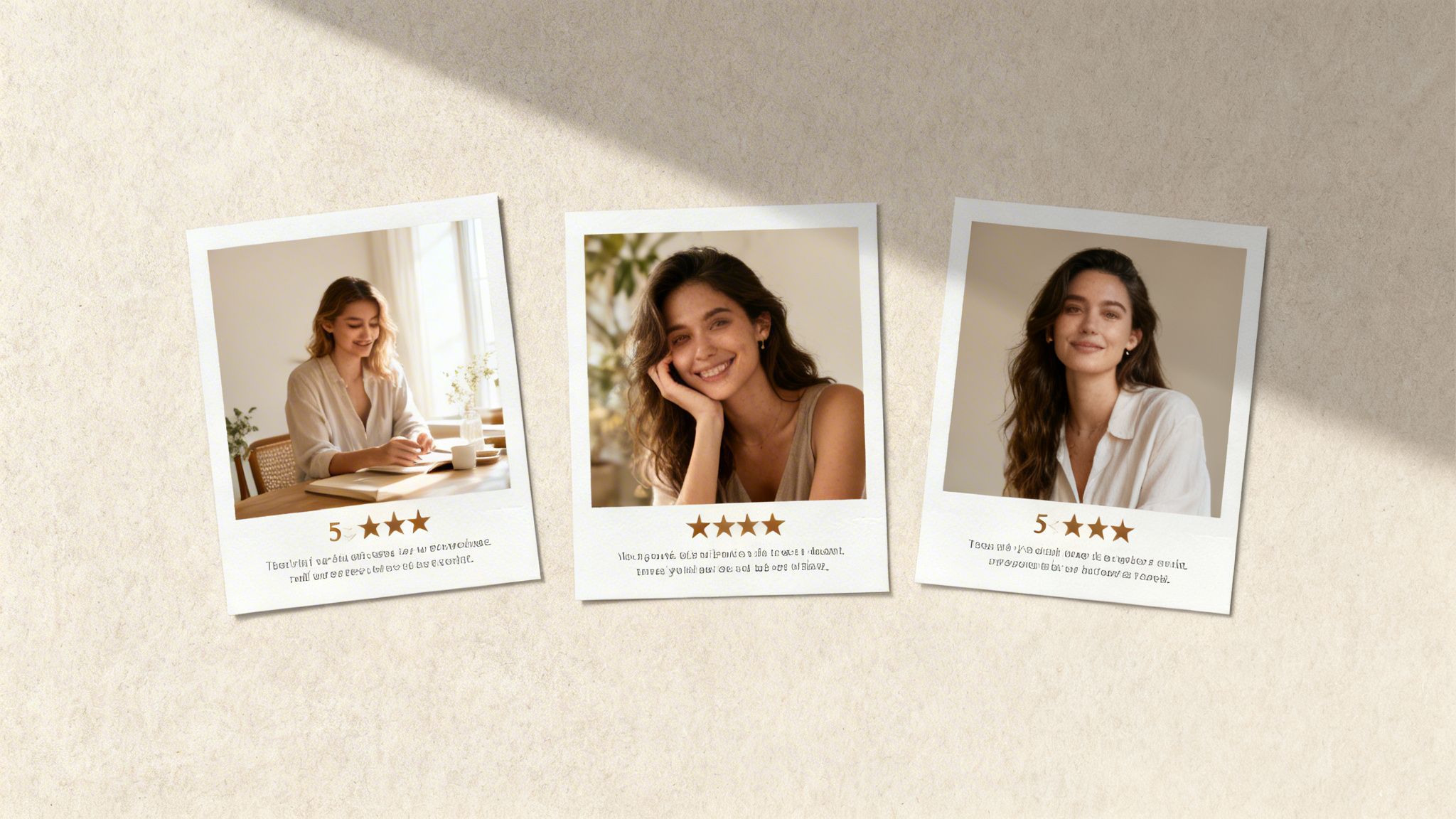
These campaigns are among the most effective email campaigns examples because they address a core psychological driver in purchasing decisions: social influence. Instead of telling subscribers your product is great, you’re showing them. By featuring real people achieving real results, you lower the perceived risk for new customers and create a powerful, authentic connection that is hard to replicate with standard marketing.
Strategic Breakdown
- Goal: Build trust, overcome purchase hesitation, and drive conversions by showcasing positive customer experiences.
- Target Audience: Leads who have shown interest but haven’t purchased, or existing customers considering a repeat purchase.
- Key Insight: Consumers trust peer recommendations far more than brand advertisements. Highlighting authentic user experiences and stellar reviews provides the final push a hesitant buyer needs to feel confident in their decision.
Actionable Blueprint & Tactics
Subject Line Options:
- Email 1: “See what everyone is raving about…”
- Email 2: “Don’t just take our word for it. ⭐⭐⭐⭐⭐”
- Email 3: “Real results from real customers like you.” Body Copy & Checkout Links: Feature a compelling customer quote prominently. For example: “‘This is the best skincare I’ve ever used!’ - Sarah J. See why our customers are obsessed.” Pair this with a direct Checkout Link to the featured product: “Ready to get glowing? We’ve added our best-selling serum to your cart with a special 10% discount applied.” This instantly connects social proof with a frictionless purchase path.
Implementation Steps:
- Trigger: Send this campaign to segments that have viewed a product but not purchased, or as part of a longer nurture sequence.
- Email 1 (Review Spotlight): Feature your highest-rated product. Showcase 3-5 concise, 5-star reviews with customer photos if available.
- Email 2 (UGC Showcase): Curate and share high-quality user-generated photos from social media (with permission). Tag the product in each photo.
- Email 3 (Case Study/Transformation): Tell a more detailed customer story. Use a before-and-after format or highlight a specific problem your product solved.
- Email 4 (Last Call): Combine multiple testimonials and create a sense of community, urging subscribers to “join thousands of happy customers.”
Comparison of 10 Email Campaign Types
| Campaign | Implementation Complexity 🔄 | Resource Requirements ⚡ | Expected Outcomes 📊⭐ | Ideal Use Cases 💡 | Key Advantages ⭐ |
|---|---|---|---|---|---|
| Welcome Series Email Campaigns | 🔄🔄 — Moderate automation & content creation | ⚡⚡ — Templates, copy, creative assets | 📊 Open 40–50%; drives first-purchase conversions | 💡 New subscribers onboarding; first-touch nurture | ⭐ Establishes brand, cost-effective acquisition |
| Cart Abandonment Recovery Campaigns | 🔄🔄🔄 — Sophisticated timing & dynamic content | ⚡⚡⚡ — Real‑time cart data, dynamic links, automation | 📊 Recovers ~15–30% of carts; highly measurable ROI | 💡 Recover high‑intent shoppers who left checkout | ⭐ Direct checkout links reduce friction; urgency works |
| Flash Sale & Limited‑Time Offer Campaigns | 🔄🔄 — Time coordination & countdown assets | ⚡⚡ — Design, scheduling, inventory coordination | 📊 Short revenue spikes (24–72 hrs); high engagement | 💡 Inventory clearance; seasonal/time‑sensitive promos | ⭐ Drives immediate action and high conversion rates |
| Post‑Purchase & Order Confirmation Campaigns | 🔄🔄 — Transactional flow + upsell logic | ⚡⚡ — Order data, product recommendations | 📊 High open rates; +15–25% repeat purchase potential | 💡 Immediately after purchase to upsell/capture reviews | ⭐ Builds trust, increases AOV and customer lifetime value |
| Re‑Engagement & Win‑Back Campaigns | 🔄🔄 — Segmentation & incentive sequencing | ⚡⚡ — Targeted offers, segmented lists | 📊 ~5–10% reactivation; Checkout Links boost rates 20–30% | 💡 Lapsed customers (60–180+ days inactive) | ⭐ Low-cost revenue recovery; reduces list decay |
| Personalized Product Recommendation Campaigns | 🔄🔄🔄 — Recommendation engine & dynamic templates | ⚡⚡⚡ — Data, AI models, personalization tooling | 📊 CTR 2–5x; conversions +30–40% vs generic links | 💡 Cross-sell/upsell based on behavior and purchase data | ⭐ Improves relevance, AOV and repeat purchases |
| Educational Content & Newsletter Campaigns | 🔄🔄 — Editorial calendar & consistent cadence | ⚡⚡⚡ — Ongoing content creation and curation | 📊 Slower direct sales; list growth +20–40% faster | 💡 Thought leadership, long‑term brand building | ⭐ Builds authority, trust and higher LTV over time |
| Segmented & Behavioral Trigger Email Campaigns | 🔄🔄🔄 — Complex workflow logic & triggers | ⚡⚡⚡ — Robust data infra and automation platform | 📊 Outperforms batch campaigns by 50–300% | 💡 Time‑sensitive, behavior‑driven outreach (e.g., browsed, purchased) | ⭐ Highly relevant, better deliverability and ROI |
| VIP & Loyalty Program Email Campaigns | 🔄🔄🔄 — Tiering, exclusive offers, personalization | ⚡⚡⚡ — CRM data, rewards integrations, service support | 📊 VIPs often ~20% of customers driving ~80% revenue; +30–50% spend | 💡 High‑value customers, repeat purchasers, loyalty tiers | ⭐ Increases retention, spend and customer advocacy |
| Social Proof & User‑Generated Content Campaigns | 🔄🔄 — Collection, curation and rights management | ⚡⚡ — UGC platform/tools and moderation effort | 📊 Conversion uplift ~20–35% when trust is showcased | 💡 New product launches, trust‑building campaigns | ⭐ Authenticity and credibility that materially boosts conversion |
From Examples to Execution: Implementing Your Winning Email Strategy
The journey through these ten powerful email campaign examples has provided more than just templates; it has offered a strategic playbook for transforming your Shopify store’s communication. From the crucial first impression of a Welcome Series to the critical revenue recovery of an Abandonment Campaign, and the long-term relationship building of a VIP Program, a clear pattern emerges. The most successful brands don’t just send emails; they architect customer experiences.
The common thread weaving through all these high-impact email campaigns examples is a relentless focus on the customer. It’s about delivering the right message to the right person at precisely the right moment. This isn’t achieved by accident. It’s the result of smart segmentation, behavioral triggers, and a deep understanding of what motivates your audience at each stage of their journey with your brand.
The Core Principles of Winning Campaigns
As you move from inspiration to implementation, remember the foundational strategies that turn a good email into a great one. These are the principles that underpin the examples we’ve explored:
- Hyper-Personalization is Non-Negotiable: Moving beyond just using a customer’s first name is essential. True personalization leverages purchase history, browsing behavior, and loyalty status to create emails that feel like a one-to-one conversation.
- Reduce Friction at Every Step: The path from email to purchase must be seamless. The best campaigns, especially for cart recovery and flash sales, eliminate unnecessary clicks and form fields, making it incredibly easy for a customer to say “yes.”
- Automation is Your Growth Engine: Manual email blasts have their place, but the real power lies in automated flows. Trigger-based campaigns like post-purchase follow-ups and win-back series work for you 24/7, nurturing customers and driving revenue on autopilot.
- Data-Driven Optimization is Key: Your first attempt is just a starting point. The difference between a campaign that performs and one that excels is consistent A/B testing of subject lines, CTAs, timing, and offers. Let your data guide your decisions.
Your Actionable Roadmap to Implementation
Reading about effective email campaigns examples is the first step, but action is what drives results. Don’t feel overwhelmed by the need to implement everything at once. Instead, adopt a focused, strategic approach.
- Start with the Biggest Opportunity: Analyze your current metrics. Is your cart abandonment rate high? Start there. Is your repeat purchase rate low? Focus on a post-purchase or VIP campaign first. Tackling your most significant pain point will deliver the most immediate impact.
- Integrate Powerful Tools: Acknowledge that your standard email service provider may have limitations. The ability to generate dynamic, pre-filled checkout links, as highlighted in several examples, is a game-changer for reducing friction and boosting conversions.
- Establish Your Baseline: Before launching a new campaign, document your current KPIs. Know your open rates, click-through rates, conversion rates, and average order value. This baseline is crucial for accurately measuring the success of your new initiatives.
- Commit to the Process: Building a world-class email program doesn’t happen overnight. It requires a commitment to learning, testing, and refining your approach. For comprehensive guidance on making your email efforts pay off, explore insights on High Performance Email Marketing. By internalizing these principles and following this roadmap, you can systematically elevate your email marketing from a simple broadcast tool into your store’s most reliable and profitable growth channel. The examples in this guide are not just ideas; they are proven strategies waiting to be adapted to your unique brand and audience.
Ready to turn these examples into effortless revenue? Checkout Links is the tool designed to eliminate friction in your campaigns by creating dynamic, pre-filled checkout links you can embed directly into your emails. Stop sending customers to product pages and start sending them directly to a completed checkout to instantly boost your conversion rates.
Get Checkout Links and supercharge your email campaigns today!