If you want to get serious about managing your email campaigns, you need to master three things: smart audience segmentation, powerful automation, and creating a checkout experience with zero friction. Get these right, and your Shopify email list will stop being just a list of contacts and start acting like an automated, predictable revenue engine for your store.
The Hidden Revenue in Your Shopify Email List
Let’s cut to the chase: most Shopify store owners are leaving money on the table. Your email list isn’t just a box to tick on your weekly to-do list; it’s a direct line to your most loyal audience and a sales channel just waiting to be tapped. This guide is all about skipping the fluff and getting straight to what actually works for e-commerce.
We’re going to walk through practical, real-world strategies that turn subscribers into repeat buyers. Think of this less as a theoretical lecture and more as a roadmap to shifting your email efforts from a routine chore into a reliable source of income.
Why Email Marketing Is Still King
In a world of ever-changing social media algorithms, email remains one of the most dependable and profitable channels you have. It’s a direct, personal conversation with people who have already raised their hands and said they want to hear from you. The numbers don’t lie.
More than 63% of marketers across the globe rely on email as a core part of their strategy. The return is incredible, delivering an average of €42 for every euro spent—easily beating out social media and paid ads when it comes to efficiency. For Shopify store owners, this translates directly into sales. In fact, 60% of consumers say they’ve made a purchase as a direct result of a marketing email they received. If you’re interested in the data, you can explore more powerful email marketing statistics and see what they mean for your bottom line.
What This Guide Will Cover
This guide is built for action. We’re moving past the basics to show you exactly how to plan, build, and optimize your email strategy for the biggest impact.
Here’s what you’ll learn how to do:
- Segment Your Audience: Forget one-size-fits-all emails. We’ll show you how to group customers based on what they actually do—like their purchase history or how often they open your emails—so you can send messages that feel personal and relevant.
- Build Powerful Automations: You’ll learn how to set up “set it and forget it” workflows that work for you around the clock. Think welcome series, abandoned cart reminders, and post-purchase follow-ups that sell for you 24/7.
- Create Frictionless Conversions: We’ll introduce you to tools like Checkout Links that close the gap between an email click and a completed purchase. By removing unnecessary steps, you can significantly boost your conversion rates. By the time you’re done, you’ll have a clear, actionable playbook to manage your email campaigns with confidence and transform your Shopify store’s email list into a primary sales driver.
Setting the Stage for Email Marketing Success
Before you even think about crafting that killer subject line, you need to lay the groundwork. This initial setup is what separates the Shopify stores that generate real revenue from email from those that just end up in the spam folder. It all comes down to picking the right tools and then getting the right people on your list.
Think of it like building a house. You wouldn’t throw up the walls without first pouring a solid foundation. In email marketing, your Email Service Provider (ESP) is that foundation, and your subscriber list is the frame. Get these two pieces right, and everything else you do will be that much more powerful.
Choosing Your Email Service Provider (ESP)
Your first major decision is picking an ESP. For any Shopify store, the absolute non-negotiable feature is a deep, seamless integration with your e-commerce platform. This is what lets customer data—like purchase history and browsing behavior—flow directly into your email tool, which is the magic behind powerful segmentation and automation.
But don’t stop at just a basic Shopify connection. The best ESPs for e-commerce also play nicely with modern tools that cut down on friction for the customer. For instance, find an ESP that supports features like Checkout Links. This lets you embed direct purchase links right inside an email, turning a click into an instant sale. The customer doesn’t even have to visit a product page or add anything to a cart. It’s a total game-changer for flash sales and abandoned cart emails.
Growing a List That Actually Wants to Hear From You
With your ESP locked in, your focus needs to shift to building your email list. But let me be clear: the goal isn’t just a big list. It’s a high-quality list full of people who are genuinely interested and engaged. Buying lists is the fastest way to tank your sender reputation and land you in the spam folder for good.
Instead, you need to attract subscribers by offering real, undeniable value.
- Offer Exclusive Content: Create a downloadable style guide, a handy checklist, or a behind-the-scenes video that your audience can’t get anywhere else. If you sell apparel, a “Complete Guide to Fall Layering” could be a huge draw.
- Promise Early Access: Make subscribers feel like insiders by giving them a head start on big sales like Black Friday. This creates a powerful sense of urgency and exclusivity.
- Give Them a “First to Know” Perk: Let subscribers know they’ll be the first to hear about new product drops before you announce them publicly. This works incredibly well if you sell limited-edition items.
Keeping Your List Healthy and Engaged
Getting subscribers is just the beginning. You have to actively maintain your list, a practice we call list hygiene. A clean, healthy list ensures your emails actually make it to the inbox, which is crucial for any campaign’s success. If you let it go, you’ll see your deliverability plummet as providers like Gmail start flagging your messages as spam.
A great starting point is to regularly prune inactive subscribers—people who haven’t opened your emails in, say, three to six months. I know it feels wrong to shrink your list, but sending emails to people who don’t care hurts your sender reputation. It signals to inbox providers that your content isn’t wanted.
Ultimately, a strong email strategy is about more than just sending promotions; it’s designed to improve ecommerce customer experience and build real loyalty. The data doesn’t lie. A staggering 82% of marketers worldwide count on email, and 73% say it’s their number one channel for driving results. The State of Cross-Channel Marketing Report shows just how much a well-managed list fuels that success.
Crafting Campaigns That Convert with Smart Segmentation
Let’s be honest: the days of blasting your entire email list with the same generic message are long gone. If you want to run an email campaign that actually drives sales, you have to stop talking to a crowd and start having one-on-one conversations at scale. This is where smart segmentation comes in.
It’s really just the art of grouping your subscribers based on their behavior, interests, and history with your brand.
Personalization isn’t just a nice-to-have anymore; it’s the single most powerful tool you have to cut through the noise of a crowded inbox. Sending targeted messages that truly resonate with specific groups of customers is what turns passive subscribers into active buyers. It shows you’re paying attention.
And the scale of email marketing makes this strategy a no-brainer. Email is absolutely thriving, with 63% of global marketers using campaigns regularly and 65% relying on automation to get it all done. With nearly 370 billion emails sent every single day to 4.48 billion users, its reach is just unmatched. For Shopify merchants like you, this direct line to your customers is gold, especially since 99% of people check their inboxes daily.
Breaking Down Your Audience into Key Segments
For a Shopify store, segmentation doesn’t need to be some overly complex puzzle. You can create incredibly effective campaigns by just focusing on a few core customer groups. Each one has different needs and will respond to completely different types of messages.
Here are the most valuable segments to start with:
- New Subscribers: These are people who just raised their hands to hear from you. Your job is to make a fantastic first impression and gently guide them toward that first purchase.
- Loyal Repeat Customers: Think of this as your VIP group. They’ve bought from you multiple times and are your biggest brand advocates. Treat them like gold.
- High-Value Shoppers: These customers might not buy often, but when they do, they spend big. Your goal here is to keep them engaged and remind them of the premium value you offer.
- Inactive or “At-Risk” Subscribers: This segment hasn’t opened an email or made a purchase in a while. A well-timed re-engagement campaign can win them back before they’re gone for good. By splitting your list this way, you can tailor your content to match exactly where each customer is in their journey with your brand.
Campaign Ideas for Each Customer Segment
Once you’ve got your segments defined, the fun begins. You can start building specific campaigns designed to speak directly to them. Generic, one-size-fits-all promotions just won’t cut it here; relevance is everything.
For New Subscribers: The Welcome Series Your welcome series is your one shot to make a lasting impression. Don’t just send a single email and call it a day. I always recommend a simple three-part automated flow.
- Email 1 (Immediate): Welcome them and instantly deliver the discount or offer you promised. A direct Checkout Link with the discount pre-applied is perfect here—they can buy in a single click.
- Email 2 (2 Days Later): Tell your brand story. What makes you different? Share your mission, a peek behind the scenes, or what inspired you to start the business.
- Email 3 (4 Days Later): Showcase your best-selling products backed by social proof, like glowing customer reviews or user-generated photos. For Loyal Repeat Customers: The VIP Treatment Make your best customers feel like the insiders they are.
- Campaign Idea: Grant them early access to a new product launch or a major sale. Send them an email a day or two before the public announcement with an exclusive link to shop.
- Pro Tip: I’ve seen brands use a passcode-protected Checkout Link for this, which makes the whole experience feel truly exclusive and keeps the link from being shared all over the internet.
Re-Engaging Your Inactive Subscribers
Winning back a customer who has already bought from you is far cheaper and easier than acquiring a brand new one. A simple “we miss you” campaign can work wonders for that at-risk segment.
- Campaign Idea: Send them a compelling offer they can’t refuse, like “Take 20% Off, On Us.” Frame it as a special invitation for them to come back and see what’s new.
- Subject Line Power: Your subject line is absolutely critical here. Try something direct and a little emotional, like “Is this goodbye?” or “We’ve missed you! Here’s a gift.”
- Frictionless Purchase: Again, a Checkout Link is your best friend. A subscriber who is already on the fence won’t have the patience for a clunky, multi-step checkout. Let them click and buy, instantly. For a deeper dive into creating these specific groups, you can check out our guide on building a powerful email segmentation strategy. This approach completely transforms how you manage an email campaign, shifting it from a simple broadcast tool to a conversation-starter that actually drives sales.
Put Your Sales Engine on Autopilot with Targeted Workflows
Okay, so you’ve sliced your audience into smart segments. That’s the foundation. But the real magic happens when you build an automated sales machine that runs 24/7, catching customers at just the right moment without you lifting a finger.
This is where automated workflows come in. Think of them as a series of emails automatically sent when a customer does something specific—like signs up, leaves items in their cart, or makes a purchase.
Setting these up is how you create a powerful email strategy that literally works while you sleep. We’re going to focus on the three automations I’ve seen deliver the biggest returns for Shopify stores, time and time again.
The All-Important Welcome Series
You only get one shot at a first impression, and your welcome series is it. This sequence kicks off the second someone joins your list, and its entire job is to nurture that initial spark of interest into a first purchase.
A single “welcome” email just doesn’t cut it anymore. You need a multi-step series to build a real relationship and keep your brand from being forgotten.
Here’s a simple but effective flow:
- Email 1 (Send Immediately): Deliver the goods. If you promised a 15% discount for signing up, give it to them right away. Better yet, don’t just send a code—give them a direct Checkout Link with the discount already applied. Make it ridiculously easy for them to buy.
- Email 2 (Wait 2 Days): Tell your story. This is your chance to connect on a human level. What’s your mission? Why did you start this business? People buy from people, so let them get to know you.
- Email 3 (Wait 3-4 Days): Show off your greatest hits. Introduce your bestselling products, backed by social proof like customer reviews or ratings. Let them see what everyone else is loving. This flow is designed to smoothly guide a curious subscriber from “just looking” to “ready to buy.”
The High-Impact Abandoned Cart Sequence
Did you know that nearly 70% of all online shopping carts are abandoned? That’s not a lost sale—it’s one of the biggest opportunities sitting in your business right now. An abandoned cart workflow is your single best tool for clawing back that revenue.
The secret to a great cart recovery email is eliminating friction. Someone was interested enough to add your products to their cart; your only job is to clear the path for them to finish. This is where Checkout Links are an absolute game-changer. Instead of sending them back to a generic cart page, you send a link that takes them directly to a pre-filled checkout. One click, and they’re paying.
Here’s a proven sequence:
- Email 1 (1-2 Hours After Abandonment): Start with a gentle nudge. A simple subject line like “Did you forget something?” works wonders. Show them images of the items they left behind and include a big, clear call-to-action button with their personalized Checkout Link.
- Email 2 (24 Hours Later): Create a little urgency or handle a common objection. Mention that stock is limited or remind them of your awesome return policy.
- Email 3 (48-72 Hours Later): Time for a small incentive. A little push, like 10% off or free shipping, is often all it takes to get them over the finish line.
The process is simple but incredibly powerful: use customer actions to segment, personalize the message, and then convert.
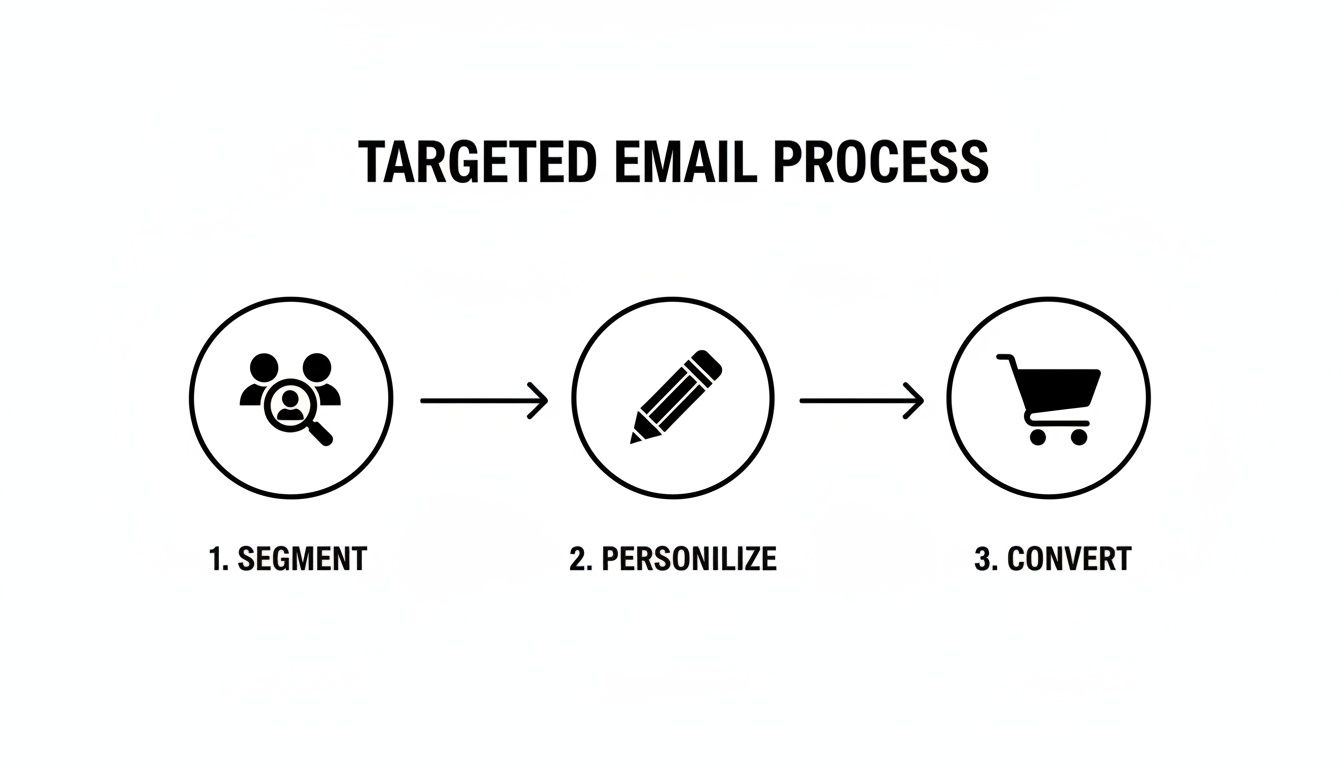
As you can see, effective automation is all about using data to send the right message at the right time with a direct path to purchase.
The Post-Purchase Follow-Up
The journey doesn’t stop when the payment goes through. The post-purchase window is your golden opportunity to turn a one-time buyer into a loyal fan who comes back again and again.
It all starts with a simple “thank you,” but it can do so much more. This is your chance to teach customers about their new product, ask for a valuable review, or even cross-sell a related item.
- Email 1 (Immediately After Purchase): Send a beautiful, on-brand order confirmation and a genuine thank you. This makes them feel good about their purchase.
- Email 2 (7-10 Days Later): Ask for a review. The timing here is crucial—you want to give them enough time to have actually received and used the product.
- Email 3 (21-30 Days Later): Suggest the perfect companion product. If they bought shampoo, now is the perfect time to introduce the conditioner. Simple and smart. These three automations form the trifecta of a high-performing email marketing program. For a quick overview, here’s a summary of the most impactful workflows every Shopify store should have.
Essential Automation Workflows for Shopify Stores
| Automation Workflow | Primary Goal | Key Tactic with Checkout Links |
|---|---|---|
| Welcome Series | Nurture new subscribers and drive the first purchase. | Include a pre-discounted Checkout Link in the first email for an effortless buying experience. |
| Abandoned Cart | Recover potentially lost sales from interested shoppers. | Send customers directly to a pre-filled checkout page to minimize friction and boost conversions. |
| Post-Purchase | Increase customer lifetime value and build loyalty. | Use Checkout Links to cross-sell related products, making it a one-click process to add new items. |
Together, the welcome, abandoned cart, and post-purchase workflows create a powerful engine that drives sales, recovers revenue, and builds the lasting customer relationships that grow a brand.
Turn Email Clicks into Instant Sales with Checkout Links
You’ve done everything right. You wrote a killer email, nailed the segmentation, and crafted an offer that’s impossible to ignore. The click-through rate is looking great, but the sales just aren’t matching up. What gives?
More often than not, the problem lies in that little gap between the email click and the final purchase. Every extra step a customer has to take—loading a product page, finding the “add to cart” button, navigating the cart itself—is another opportunity for them to get distracted and drop off.
This is a classic conversion killer. When a subscriber is hyped about a flash sale you just announced, they don’t want to go on a five-step scavenger hunt. They want to buy. Right now.
Skip the Cart, Boost Your Conversions
What if you could send your subscribers directly from that email click to a pre-filled checkout page? No product pages. No adding items to a cart. That’s exactly what Checkout Links are designed for, and they’re one of the most powerful tools for improving your email marketing ROI.
A Checkout Link isn’t just a standard URL. It’s a direct, shareable path to purchase that can have specific products, quantities, and even discount codes already applied. By getting rid of all those extra steps, you create a completely seamless experience that cashes in on your subscriber’s immediate interest.
How to Use Checkout Links in Your Campaigns
The possibilities here are endless, turning your regular email promotions into high-octane sales machines.
Here are a few ways I’ve seen them work wonders for Shopify stores:
- Flash Sales: Announce a 24-hour deal and drop in a Checkout Link for the discounted product. Customers click, and they’re already at the payment step. It’s that fast.
- Abandoned Cart Recovery: This is a non-negotiable. Sending a link that instantly rebuilds a shopper’s exact cart makes it almost too easy for them to finish what they started.
- Influencer & Social Media Campaigns: Equip your partners with unique Checkout Links that have their special discount code pre-applied. It makes the buying process a breeze for their audience and simplifies tracking for you. You don’t need to be a tech wizard to make this happen. You can generate a link for any product or a custom bundle of products right from your dashboard.
This screenshot shows just how simple it is to generate a direct purchase link for a specific product, ready to be embedded in your next email.
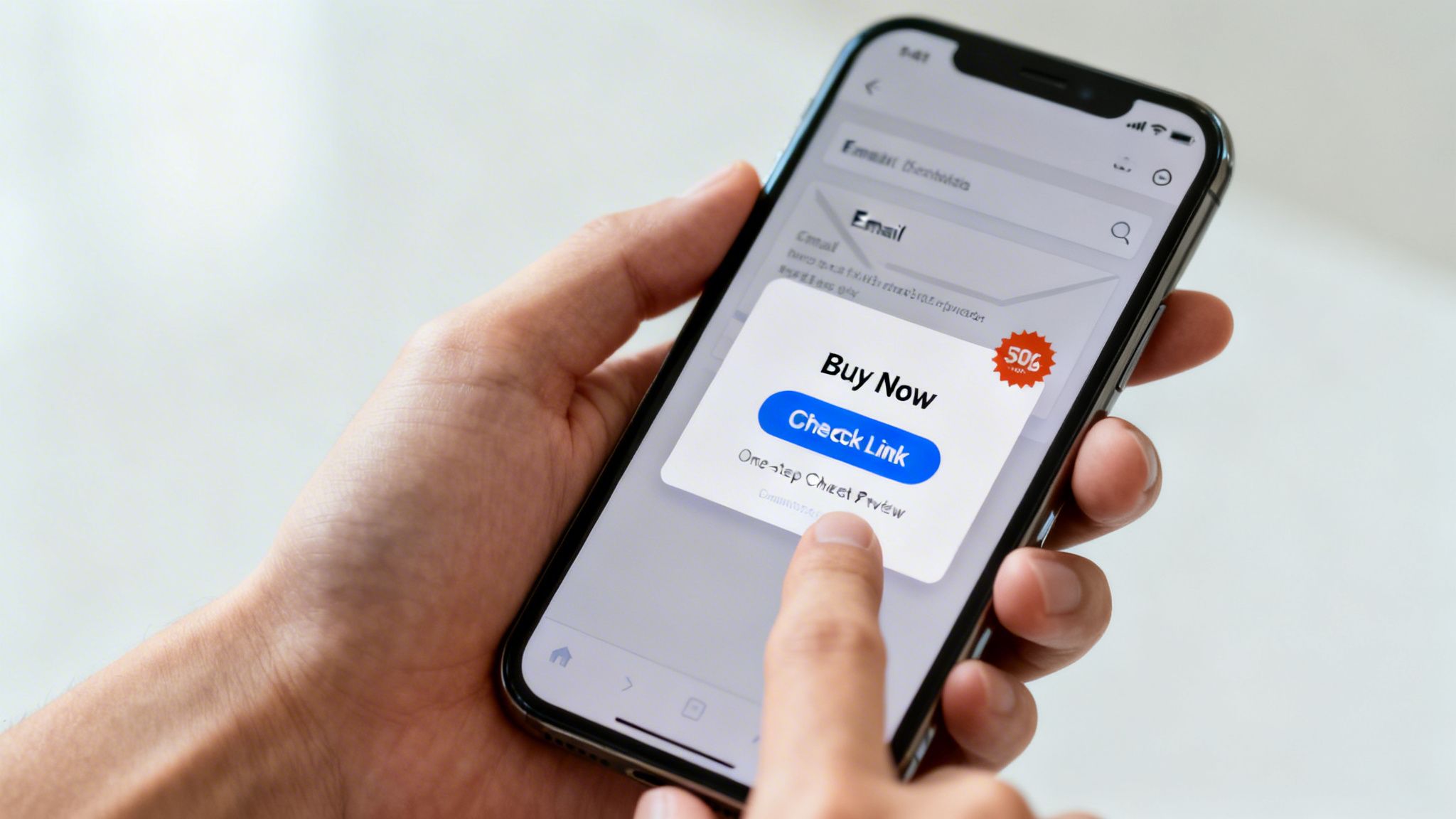
The interface is clean and intuitive, letting you pick a product and get a link that sends customers straight to payment, cutting out all the fluff in between.
Making this small adjustment to your strategy can deliver a big impact. For a more detailed guide, check out our post on how to send links that sell, which breaks it down step-by-step. By focusing on creating a truly frictionless path to purchase, you’ll start turning those email clicks into what they were always meant to be: completed sales.
Analyzing Performance to Fuel Future Growth
https://www.youtube.com/embed/Oi2pdrwPlhw
Hitting “send” on a campaign isn’t the finish line—it’s the starting gun. This is where the real work begins. The most successful Shopify owners I know don’t just launch emails and hope for the best; they dive deep into the data to figure out what resonates and what falls flat.
To really get a handle on your campaign’s performance, you have to look past the surface-level numbers. Open rates are nice to see, but they don’t really tell you if you’re making money.
Key Metrics That Actually Matter
I always tell my clients to focus on a few core metrics that measure genuine action and intent. These are the numbers that connect directly to your store’s growth.
- Click-Through Rate (CTR): This is the percentage of people who actually clicked on a link in your email. A healthy CTR is a great sign that your copy, offer, and call-to-action were compelling enough to make someone stop scrolling and take the next step.
- Conversion Rate: This is the big one—the percentage of recipients who followed through and made a purchase (or completed whatever your goal was). Ultimately, this is the truest measure of a campaign’s success.
- Revenue Per Recipient (RPR): To get this, just divide the total revenue generated by a campaign by the number of people who received the email. It’s a fantastic metric for comparing the raw financial impact of different emails head-to-head.
Systematically Improve with A/B Testing
Once you have a handle on your baseline numbers, you can start making smart, incremental improvements through A/B testing (or split testing). The concept is simple: you send two slightly different versions of an email to two small, separate groups from your list and see which one performs better.
The key is to change only one thing at a time. If you change the subject line and the main image, you’ll never know which element was responsible for the lift in performance. This isn’t about guesswork; it’s about making data-driven decisions.
So, what should you test? The possibilities are endless, but here are a few high-impact variables I always recommend starting with:
- Subject Lines: Try a clear, straightforward subject line against one that piques curiosity.
- Call-to-Action (CTA): Test different button copy. Does “Shop Now” work better than “Grab Your 20% Off”?
- Offers: Pit a 20% discount against a free shipping offer to see which one your audience values more.
- Send Times: Is your audience full of morning birds or night owls? Test sending at 8 AM versus 8 PM. This ongoing cycle of testing, analyzing, and refining is what separates the pros from the amateurs. It’s how you turn your email list from a simple communication channel into one of your store’s most valuable and predictable revenue streams.
If you want to make sure your email efforts are always aligned with your bigger business goals, it might be worth conducting a comprehensive digital marketing audit. This can help you spot opportunities and ensure every campaign is pushing you forward.
Common Questions (and Straightforward Answers)
Even the most seasoned email marketers run into questions. When you’re deep in the weeds of planning and sending campaigns, it’s easy to second-guess your strategy. Here are a few of the most common things Shopify owners ask, along with some practical advice.
How Often Should I Be Emailing My List?
This is the million-dollar question, isn’t it? The honest answer is: there’s no perfect number for everyone. A solid baseline for most stores is sending one to two newsletters a week, in addition to your automated flows like welcome series and abandoned carts.
The real trick is to watch your audience’s behavior. Are your open and click rates holding steady? Great, you’ve probably found a good rhythm. If you suddenly see unsubscribes jump after a campaign, that’s a clear signal to pull back a bit or seriously rethink your content’s value.
What’s the Best Way to Get More Email Subscribers?
First, a crucial rule: Never, ever buy an email list. It might seem like a shortcut, but it’s a surefire way to destroy your sender reputation and land your emails in the spam folder forever. You want people who actually want to hear from you.
Here are a few methods that consistently work:
- Smart Pop-Ups: Don’t just ask for an email. Offer something valuable in return, like a 15% discount on their first order or a helpful downloadable guide.
- Social Media Giveaways: Running a contest where an email address is part of the entry is a fantastic way to attract engaged followers to your list.
- The Simple Footer Form: Make it incredibly easy for interested site visitors to sign up by placing a clean, simple form in your website’s footer.
How Do I Keep My Emails Out of the Spam Folder?
Improving your email deliverability all comes down to building a good reputation with inbox providers like Gmail and Outlook. It starts with a healthy, engaged list. Make it a regular practice to clean out subscribers who haven’t opened an email in the last 3-6 months. This shows providers that you’re only sending content to people who want it.
Ready to take that email engagement and turn it directly into revenue? With Checkout Links, you can build direct-to-purchase links that let customers buy with a single click, skipping the cart entirely. It’s the simplest way to convert interest into an instant sale.
See how Checkout Links can supercharge your campaigns and start making it easier for your customers to buy.