In today’s competitive e-commerce landscape, customers expect a unified experience whether they are scrolling on Instagram, browsing in-store, or opening an email. This is the core of omnichannel marketing: creating a single, seamless conversation across every touchpoint. For Shopify merchants, mastering this isn’t just a trend, it’s the key to boosting conversions, building loyalty, and future-proofing your brand.
To fully appreciate the examples presented, it’s essential to understand what is omnichannel commerce and how it aims to create these seamless customer experiences. This cohesive approach ensures that every interaction, regardless of the channel, feels like a continuous, personalized dialogue with your brand.
This article breaks down 10 powerful omnichannel marketing examples from industry leaders like Nike, Sephora, and innovative Shopify stores. We will dissect the strategy behind each one, providing a clear blueprint with actionable steps. More importantly, we’ll reveal how you can implement similar high-converting tactics using a simple, powerful tool like Checkout Links. Forget generic success stories; this is a tactical guide designed to give you replicable strategies for your own e-commerce business. Let’s dive into the campaigns that are setting the standard for a connected customer journey.
1. Sephora’s Digital-First Omnichannel Strategy
Sephora sets the gold standard for omnichannel marketing examples by creating a truly integrated customer journey that blurs the lines between its digital and physical worlds. The core of their strategy is a unified ecosystem where online browsing, mobile app engagement, and in-store experiences are all interconnected. Customers can interact with the brand on any channel and receive a consistent, personalized experience.
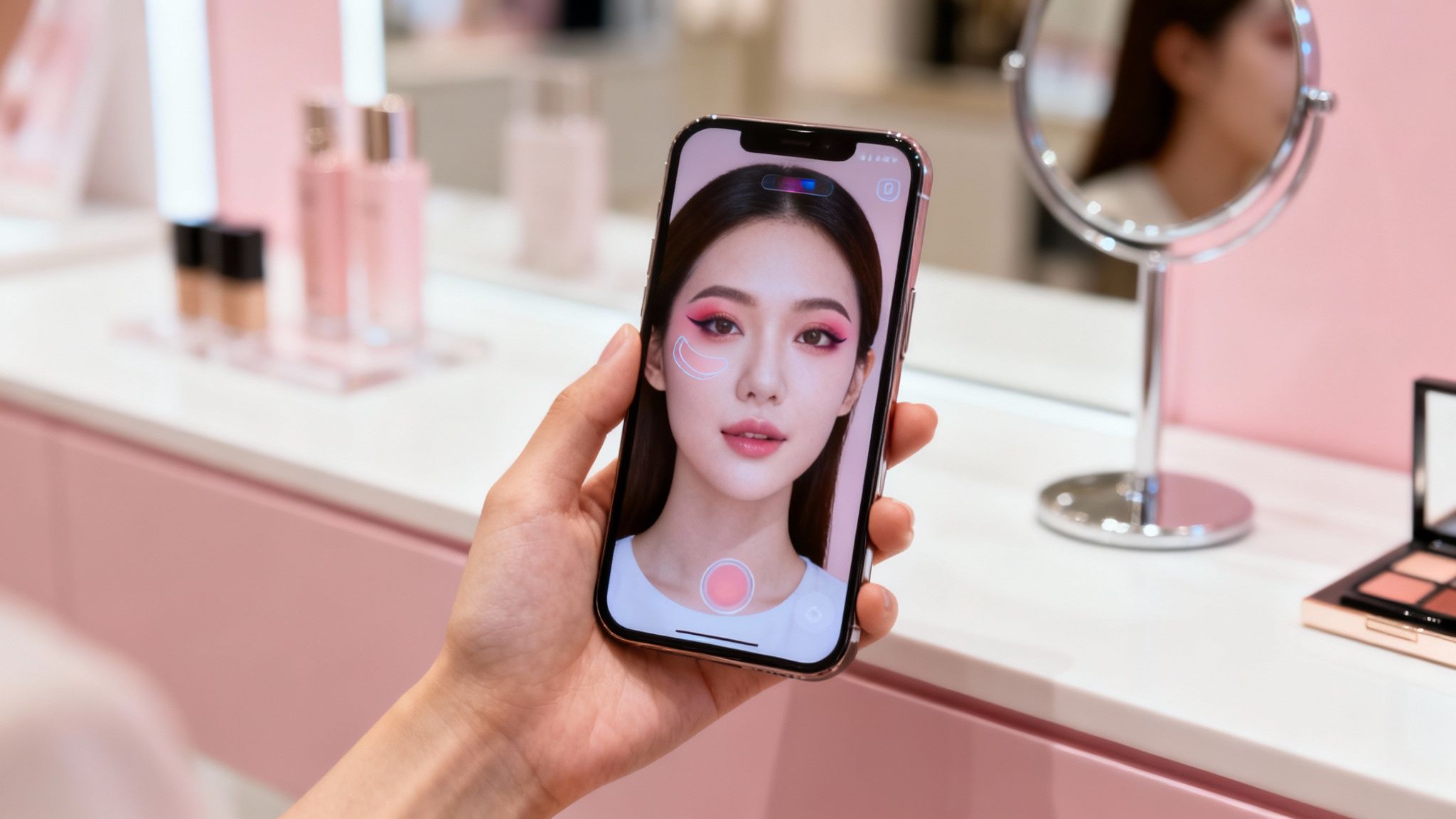
This approach makes shopping incredibly convenient. A customer might use the mobile app’s augmented reality “Virtual Artist” to try on lipstick shades, add their favorite to a universal cart, and then complete the purchase in-store for immediate pickup. All their preferences and purchase history are saved to their Beauty Insider account, allowing Sephora to deliver hyper-personalized recommendations via email or app notifications.
Strategic Breakdown
- Channels Used: E-commerce website, mobile app (with AR), physical retail stores, email marketing, and social media.
- Execution: Sephora leverages a unified customer data platform to track interactions across all touchpoints. This allows them to offer features like “Buy Online, Pick Up In-Store,” virtual beauty consultations that lead to product purchases, and a loyalty program that works seamlessly online and offline.
- Measurable Outcomes: This cohesive strategy has led to increased customer loyalty, higher lifetime value, and a significant competitive advantage in the beauty industry. By making the path to purchase frictionless, Sephora boosts conversion rates across all its channels.
Replicate This With Checkout Links
You can create a simplified version of this powerful strategy by using Checkout Links to bridge your digital marketing with instant sales. For example, send a personalized email campaign with product recommendations and embed a direct Checkout Link for each item. This bypasses the traditional cart process, allowing customers to purchase instantly from the email itself, mimicking the seamlessness of Sephora’s omnichannel experience.
https://www.youtube.com/embed/5MD0t2mUZMg
2. Nike’s Connected Retail Experience
Nike excels at creating an integrated ecosystem where customers interact seamlessly across multiple touchpoints. The brand masterfully connects its SNKRS app for exclusive releases, Nike.com for general shopping, and physical stores for personalized experiences. This is one of the best omnichannel marketing examples for using data-driven personalization and location-based notifications to drive urgency and exclusivity.
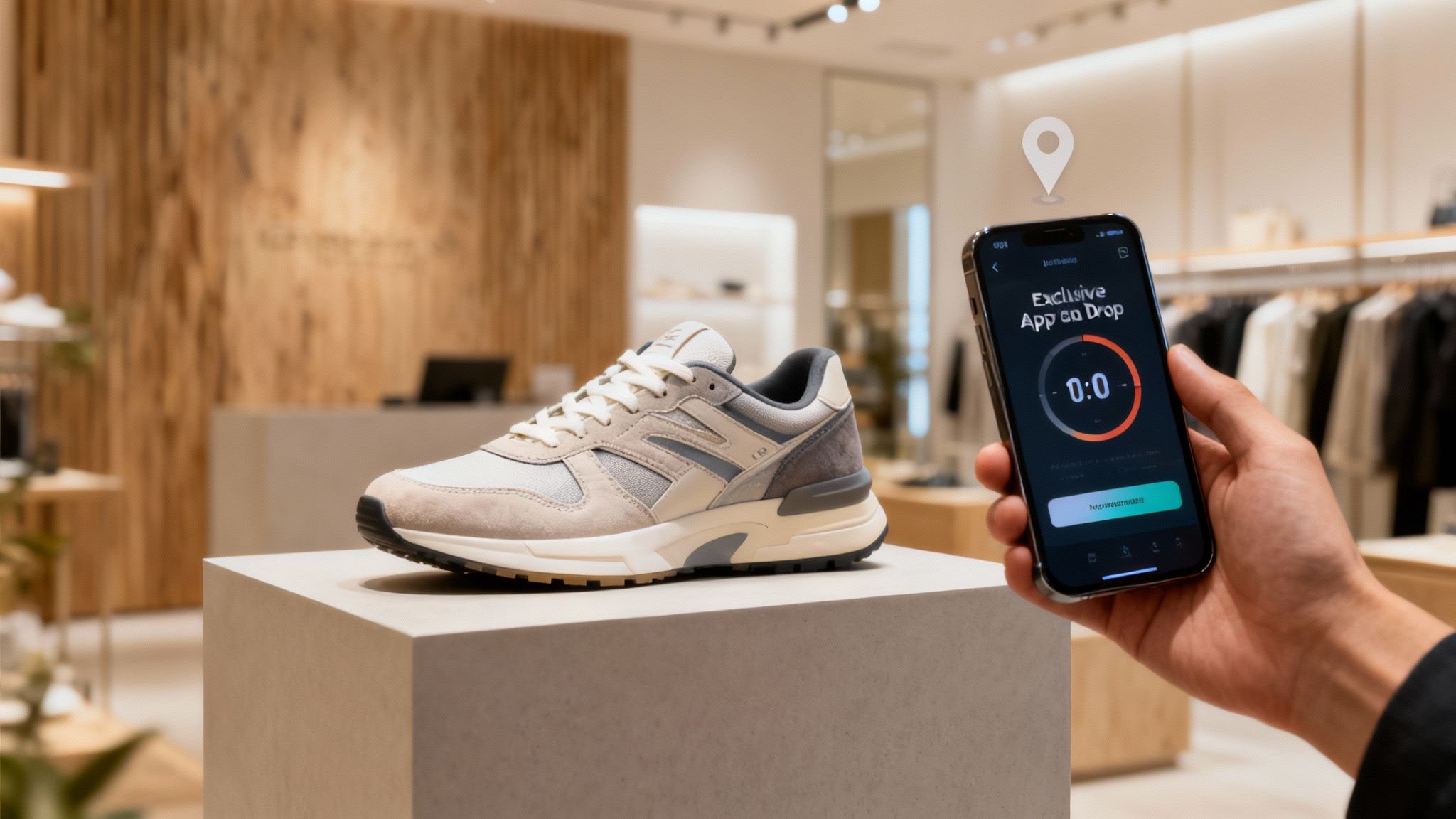
A customer might get a push notification from the SNKRS app about a limited-edition sneaker drop, prompting them to enter a digital draw. If unsuccessful, they might receive a follow-up email with links to similar styles or a notification about in-store availability at a nearby location. This interconnected journey keeps customers engaged and provides multiple paths to purchase, all while collecting valuable data to further personalize future interactions.
Strategic Breakdown
- Channels Used: Mobile apps (SNKRS, Nike App), e-commerce website, physical retail stores, email marketing, and push notifications.
- Execution: Nike uses its membership program to unify customer profiles across channels. This allows them to track app engagement, online browsing behavior, and in-store purchases. They leverage this data for targeted promotions, like app-exclusive drops and location-based inventory alerts that drive foot traffic.
- Measurable Outcomes: This strategy fosters a powerful sense of community and brand loyalty. The exclusivity created by app-based drops drives immense hype and demand, leading to higher direct-to-consumer (DTC) sales, increased app downloads, and greater customer lifetime value.
Replicate This With Checkout Links
You can mimic Nike’s strategy of creating urgent, exclusive offers by using Checkout Links. Create a time-limited sales campaign and send the direct Checkout Link to a segmented list of your most loyal customers via email or SMS. This creates a sense of exclusivity and urgency, bypassing the standard storefront to offer a VIP purchasing experience that drives immediate conversions.
3. Coca-Cola’s Social Commerce Integration
Coca-Cola excels at omnichannel marketing by turning social media engagement directly into sales. Their strategy seamlessly integrates brand storytelling on platforms like Instagram and Facebook with frictionless social commerce checkout, allowing customers to purchase products without ever leaving their social feed. This approach capitalizes on impulse buys and reduces the friction typically found in a multi-step customer journey.
This method transforms passive scrolling into an active shopping experience. A user might see a shoppable Instagram Story promoting a limited-edition flavor or a Facebook carousel ad with a direct checkout button. By combining compelling content with instant purchase options, Coca-Cola effectively shortens the sales cycle and drives conversions directly from the point of discovery. For brands looking to integrate social channels into their sales funnel, exploring dedicated social commerce applications can be highly beneficial.
Strategic Breakdown
- Channels Used: Social media (Instagram, Facebook), influencer marketing, e-commerce checkout.
- Execution: Coca-Cola creates highly engaging content like influencer campaigns and user-generated content features, embedding them with direct purchase buttons. They use platform-native shopping features and direct links to create a one-click path from ad to checkout, capturing sales at the peak of consumer interest.
- Measurable Outcomes: This strategy has led to a significant increase in impulse purchases and higher conversion rates from social media traffic. By tracking referral sources, Coca-Cola can directly measure the ROI of specific social campaigns and optimize content for maximum sales impact.
Replicate This With Checkout Links
You can mirror this social commerce powerhouse by using Checkout Links in your social media strategy. Create unique links for specific campaigns or influencer collaborations. Share these links in your Instagram Stories, bio, or in direct response to comments. This allows followers to bypass your website and complete their purchase instantly, dramatically boosting your social media conversion rates.
https://www.youtube.com/embed/z4oZrunLdZk
4. Target’s Cart Recovery and Email Personalization Campaign
Target demonstrates a masterclass in omnichannel marketing examples by transforming a common pain point, cart abandonment, into a powerful re-engagement opportunity. Their strategy centers on a highly personalized and automated email system that makes it incredibly easy for customers to complete their purchases, regardless of where they started their journey. The system seamlessly connects browsing behavior on their website or app with targeted email reminders.
This approach creates a frictionless path back to conversion. For instance, a shopper might add items to their cart on a laptop but get distracted. Target’s system automatically triggers a personalized email showcasing those exact items, often sweetened with a customer-specific discount or a free shipping offer. This email doesn’t just remind them; it provides a direct link to a pre-populated cart, removing all barriers to completing the transaction.
Strategic Breakdown
- Channels Used: E-commerce website, mobile app, and email marketing.
- Execution: Target uses a sophisticated customer data platform to track browsing and cart activity. When a cart is abandoned, it triggers a multi-touchpoint email sequence. These emails include dynamic content like the abandoned products, related recommendations, and urgency-driven elements like countdown timers for special offers.
- Measurable Outcomes: This focused strategy has directly recovered millions in potential lost revenue. By making the re-engagement and checkout process effortless, Target significantly boosts its overall conversion rates and increases customer lifetime value through timely, relevant communication.
Replicate This With Checkout Links
You can replicate this high-impact strategy by using Checkout Links in your cart recovery emails. Instead of sending a generic “You left something behind” message, generate a Checkout Link that automatically repopulates the customer’s abandoned cart. Embed this link behind a clear call-to-action like “Complete Your Order.” This one-click solution removes friction, dramatically increasing the likelihood of recovering the sale and mirroring the seamless efficiency of Target’s system.
5. H&M’s Flash Sale Coordination Across All Channels
H&M exemplifies how to execute a high-urgency omnichannel marketing campaign through perfectly synchronized flash sales. Their strategy involves launching time-sensitive promotions simultaneously across their website, mobile app, email, SMS, and even in-store displays. This creates a powerful sense of FOMO (fear of missing out) that compels customers to act immediately, regardless of where they first see the offer.
The key to H&M’s success is consistent yet channel-optimized messaging. A 24-hour flash sale is announced on Instagram with a direct link, while an email subscriber might receive a slightly different exclusive discount code. This unified campaign drives a massive, short-term surge in traffic and sales, ensuring the brand captures customer attention across its entire ecosystem at a single, critical moment.
Strategic Breakdown
- Channels Used: E-commerce website, mobile app, email marketing, SMS, social media, and in-store signage.
- Execution: H&M uses synchronized campaign launches with consistent creative assets but unique calls-to-action for each channel. They employ countdown timers and inventory scarcity messages (“Only a few left!”) online, while in-store promotions are clearly marked to align with the digital push.
- Measurable Outcomes: This approach leads to significant spikes in conversion rates and revenue during the sale period. It also boosts app engagement and email open rates, as customers are conditioned to watch for these high-value, time-limited offers.
Replicate This With Checkout Links
You can orchestrate a powerful, multi-channel flash sale using Checkout Links. Create separate links with unique discount codes for your email, SMS, and social media campaigns to track which channel performs best. Use the scheduling feature to ensure all your promotional messages go out at the exact same time. Embedding a Checkout Link directly in your social media bio or SMS message allows customers to bypass the website and purchase instantly, maximizing conversions during the critical sale window.
6. Personalization Through Data: Starbucks Rewards Integration
Starbucks excels with its loyalty-first approach, creating a powerful omnichannel marketing example that revolves around its mobile app. By integrating its Rewards program across every touchpoint, Starbucks has built a self-sustaining ecosystem that gathers valuable customer data and uses it to deliver hyper-personalized experiences. The app serves as the central hub for ordering, payment, and rewards.
This unified system makes the customer journey incredibly smooth. A customer might receive a push notification with a personalized offer based on their past orders and the local weather. They can then use the app to customize their drink, pay ahead, and simply walk into the store to pick it up, all while automatically earning loyalty points. This seamless flow between digital and physical channels keeps customers engaged and consistently coming back.
Strategic Breakdown
- Channels Used: Mobile app (with integrated payments), physical stores, email marketing, push notifications, and e-commerce website.
- Execution: Starbucks uses its unified Rewards program to track purchase history, location, and preferences. This data fuels personalized offers like birthday rewards, time-specific deals for nearby customers, and gamified challenges within the app, all designed to drive repeat visits and increase order value.
- Measurable Outcomes: This strategy has cultivated one of the most successful loyalty programs in the world, dramatically increasing customer lifetime value and visit frequency. The mobile order and pay system also improves in-store efficiency and throughput, directly boosting revenue.
Replicate This With Checkout Links
You can mirror Starbucks’ personalized offer strategy using Checkout Links to target specific customer segments. Send exclusive email campaigns with pre-filled Checkout Links for VIP customers or create QR codes for in-store displays that lead to special offers. This approach helps create a personalized shopping experience by making it easy for loyal customers to redeem deals, strengthening their connection to your brand.
https://www.youtube.com/embed/Sxg2z-3TqK8
7. Uniqlo’s Digital Showroom and Try-Before-You-Buy
Uniqlo effectively merges the tactile nature of in-store shopping with digital efficiency, creating a standout omnichannel marketing example. Their strategy treats physical stores not just as points of sale but as interactive showrooms that complement a robust digital ecosystem. This integration ensures a consistent brand experience across all touchpoints.
Customers can browse clothing in-store, scan a QR code to see online-exclusive sizes or colors, and order directly from their phone for home delivery. Alternatively, they can use Uniqlo’s app to check stock at a local store, reserve items for pickup, or get styling recommendations. This fluid journey removes friction and gives customers complete control over how, when, and where they shop.
Strategic Breakdown
- Channels Used: Physical retail stores, e-commerce website, mobile app, in-store kiosks, and email marketing.
- Execution: Uniqlo syncs its inventory management system across all channels, providing real-time stock information. In-store kiosks and the mobile app act as digital extensions of the physical shelf, giving customers access to the full product catalog. This unified data allows for services like “Click and Collect” and shipping from store locations.
- Measurable Outcomes: This model boosts in-store foot traffic while simultaneously increasing online sales. By providing flexible fulfillment options and a seamless inventory system, Uniqlo reduces the risk of lost sales due to out-of-stock items and enhances overall customer satisfaction and loyalty.
Replicate This With Checkout Links
You can mirror this integrated experience by using Checkout Links in your physical and digital marketing. Create QR codes that link directly to a pre-filled checkout for specific products featured in a product styling video or on an in-store display. This allows customers to bypass the standard website navigation and purchase instantly, capturing impulse buys and creating a direct path from discovery to conversion.
https://www.youtube.com/embed/5DYLnaG14-A
8. Fashion Nova’s Influencer-Driven Direct Commerce
Fashion Nova exemplifies a powerful, influencer-centric approach to omnichannel marketing by turning social media discovery into an instant transaction. Their strategy hinges on a massive network of influencers who promote products directly to their followers, effectively merging the top of the sales funnel (awareness) with the bottom (conversion). This creates a seamless path from seeing a product on Instagram to purchasing it.
This model thrives on impulse buys. An influencer posts a photo wearing a new dress, and their followers can immediately “swipe up” or click a link in their bio to buy the exact item. Fashion Nova removes nearly all friction, bypassing the traditional need to visit a website, search for the product, and add it to a cart. It’s a prime example of meeting customers where they are and making the purchase process invisible.
Strategic Breakdown
- Channels Used: Social media (Instagram, TikTok), influencer partnerships, user-generated content (UGC), and e-commerce website.
- Execution: Fashion Nova equips thousands of influencers with products and unique promotional codes. These influencers create content and embed direct purchase links in their stories, bios, and posts, channeling their audience’s trust directly into sales. This strategy is amplified by featuring customer UGC, creating a powerful social proof loop.
- Measurable Outcomes: This direct-to-checkout model has resulted in explosive brand growth, viral product trends, and incredibly high conversion rates from social channels. By tracking influencer-specific codes and links, they can precisely measure the ROI of each partnership and optimize their marketing spend effectively.
Replicate This With Checkout Links
You can mirror this highly effective strategy by creating unique Checkout Links for each influencer you partner with. Provide them with a direct link to a specific product or a pre-loaded cart. This allows you to track their individual performance in real-time, measuring clicks, conversion rates, and average order value. Use passcode protection on a Checkout Link to offer an exclusive discount code just for that influencer’s audience, enhancing the feeling of a special offer and driving urgency.
9. QR Code-Enabled Offline-to-Online (O2O) Conversion: McDonald’s
McDonald’s masterfully demonstrates one of the most effective omnichannel marketing examples by using QR codes to bridge its vast physical footprint with its digital ecosystem. This offline-to-online (O2O) strategy turns every piece of packaging, in-store sign, and receipt into an interactive digital gateway. Customers are encouraged to scan these codes to access the mobile app, redeem loyalty points, or unlock exclusive, time-sensitive offers.
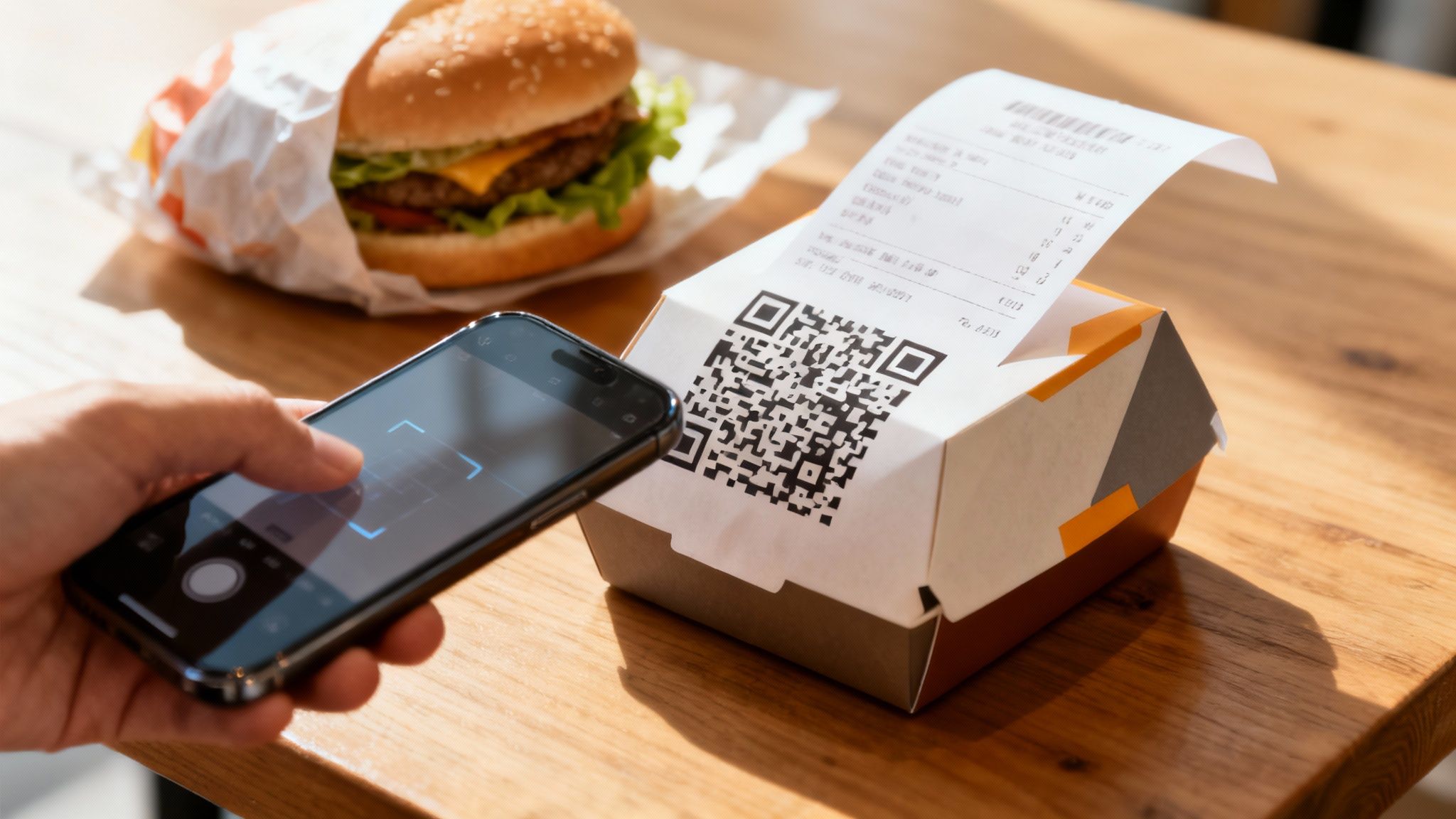
This simple action seamlessly transitions a customer from an offline experience, like finishing a meal, to an online engagement that drives repeat business. A QR code on a drink cup might lead to a “buy one, get one free” deal on their next mobile order, effectively capturing the customer in a digital loop. This approach not only boosts app downloads and digital orders but also collects valuable data on customer behavior.
Strategic Breakdown
- Channels Used: Physical locations (in-store, drive-through), product packaging, mobile app, and email marketing.
- Execution: McDonald’s places dynamic QR codes on high-visibility physical assets. These codes link directly to their app for loyalty program integration, mobile ordering, or specific promotions. This strategy captures impulse engagement and makes it incredibly easy for customers to take the desired digital action.
- Measurable Outcomes: This O2O model has significantly increased mobile app adoption, boosted the number of loyalty program members, and driven higher digital ordering volumes. It also provides rich data, allowing McDonald’s to track the effectiveness of physical promotions and understand the offline customer journey.
Replicate This With Checkout Links
You can easily deploy a similar O2O strategy for your brand. Generate branded QR codes directly from Checkout Links for in-store signage, product inserts, or event banners. For instance, place a QR code on a retail display that links to an exclusive “scan-to-buy” offer, allowing customers to purchase instantly on their phones. Explore more powerful QR code marketing strategies to see how you can turn any physical touchpoint into a sales opportunity.
10. Email Segmentation and Behavioral Triggers: Klaviyo Powered Brands
Top e-commerce brands use platforms like Klaviyo to elevate email marketing into a powerful omnichannel marketing example. This strategy moves beyond generic email blasts by using deep customer data to trigger hyper-relevant, automated messages. By connecting a customer’s on-site behavior with their inbox, brands create a continuous and personalized conversation that drives sales.
This approach ensures the right message reaches the right person at precisely the right moment. For instance, a customer who browses a specific product category receives an automated email featuring those exact items, or a long-time loyal customer gets an exclusive offer unavailable to new subscribers. It’s a dynamic system that makes email feel less like marketing and more like a personal shopping assistant.
Strategic Breakdown
- Channels Used: E-commerce website (data collection), advanced email marketing platform (Klaviyo), and SMS marketing.
- Execution: Brands integrate their store with Klaviyo to track user actions like products viewed, items added to cart, and purchase history. This data powers automated email flows such as browse abandonment, welcome series, post-purchase follow-ups, and win-back campaigns, each containing dynamic content tailored to the user’s behavior.
- Measurable Outcomes: This tactic leads to significantly higher email open rates, click-through rates, and conversion rates. By personalizing the path to purchase, brands increase customer lifetime value and build stronger brand loyalty, directly impacting revenue from their email channel.
Replicate This With Checkout Links
You can supercharge your behavioral email campaigns by embedding direct Checkout Links. Instead of just linking back to a product page, create a Checkout Link for the specific product a customer viewed in a browse abandonment email. This removes friction by taking them straight to a pre-filled checkout, dramatically increasing the likelihood of conversion from your automated emails.
10-Brand Omnichannel Marketing Comparison
| Strategy | 🔄 Implementation Complexity | 💡 Resource Requirements & Tips | ⚡ Ideal Use Cases | 📊 Expected Outcomes | ⭐ Key Advantages |
|---|---|---|---|---|---|
| Sephora’s Digital-First Omnichannel Strategy | High 🔄🔄🔄 — complex systems & sync | Tech-heavy: AR, unified inventory, mobile app; tip: prioritize real-time inventory | Mobile-to-store journeys; AR-driven discovery | Increased cross-channel conversion; lower abandonment rates | Seamless channel integration; strong personalization |
| Nike’s Connected Retail Experience | High 🔄🔄🔄 — app + real-time personalization | Substantial app/dev resources, content ops; tip: maintain exclusive app content | Limited releases, community-driven drops | Higher engagement & urgency-driven purchases | Drives exclusivity and app loyalty |
| Coca-Cola’s Social Commerce Integration | Medium 🔄🔄 — platform integration & reliance | Social commerce tooling, influencer coordination; tip: short branded links | Impulse buys via social feeds & influencer posts | Increased impulse purchases; lower CAC on socials | Frictionless social checkout; strong storytelling |
| Target’s Cart Recovery & Email Personalization | Medium-High 🔄🔄🔄 — segmentation + automation | Email platform, data integration, dynamic links; tip: time-limited links | Recovering abandoned carts; lifecycle re-engagement | High recovery ROI; improved email performance | Direct revenue recovery; scalable personalization |
| H&M’s Flash Sale Coordination Across Channels | High 🔄🔄🔄 — timing + inventory risk | Cross-channel scheduling, inventory controls; tip: stagger sends to avoid overload | Time-limited promotions across email/SMS/social/in-store | Lifted conversion & AOV; faster inventory turnover | Synchronized urgency across touchpoints |
| Starbucks Rewards Integration (Personalization) | High 🔄🔄🔄 — loyalty + data privacy needs | Unified loyalty system, location services; tip: segment by behavior | Loyalty-driven repeat purchases & mobile ordering | Higher repeat purchase rate & LTV | Deep personalization tied to loyalty |
| Uniqlo’s Digital Showroom & Try-Before-You-Buy | High 🔄🔄🔄 — AR + showroom ops | AR tech, kiosks, unified inventory; tip: pair AR content with direct links | Fit-sensitive categories; reduce returns | Reduced returns; higher conversion confidence | Builds purchase confidence via visualization |
| Fashion Nova’s Influencer Direct Checkout | Medium 🔄🔄 — campaign ops & tracking | Influencer management, unique links; tip: unique links per creator | Influencer-driven social commerce & viral drops | Strong conversion from trusted creators; organic reach | High engagement and low CAC via creators |
| McDonald’s QR Code O2O Conversion | Low-Medium 🔄🔄 — implementation simple but tracking needed | QR generation, location tagging, signage; tip: unique codes per location | Drive in-store customers to mobile orders/loyalty | Increased app adoption & local promotions performance | Low-cost offline→online bridge; scalable tracking |
| Email Segmentation & Behavioral Triggers (Klaviyo brands) | Medium-High 🔄🔄🔄 — data and segmentation complexity | Advanced email platform, data hygiene, testing; tip: dynamic Checkout Links per segment | Behavioral emails: browse/abandonment/welcome/win-back | Higher open/CTR and conversion from targeted flows | Highly personalized, high-ROI email performance |
Your Next Step: Building a Connected Commerce Engine
The journey from a siloed multichannel approach to a truly integrated omnichannel strategy can seem daunting. Yet, as the diverse collection of omnichannel marketing examples we’ve explored demonstrates, the core principle is surprisingly simple: meet your customers wherever they are and make it incredibly easy for them to buy.
From Sephora’s seamless blend of in-store tech and mobile app functionality to Nike’s hyper-connected retail ecosystem, the recurring theme is the strategic removal of friction. These brands don’t just exist on multiple platforms; they weave them together into a single, cohesive customer experience. The path from discovery on a social post to checkout is shortened, the transition from an email notification to a completed purchase is frictionless, and the line between physical and digital retail is effectively erased.
Core Takeaways from Today’s Top Brands
Let’s distill the powerful strategies from brands like Starbucks, Target, and Fashion Nova into actionable insights for your Shopify store:
- Data is the connective tissue. Successful omnichannel marketing isn’t about guesswork. It’s about leveraging customer data, like purchase history and browsing behavior, to deliver personalized, relevant experiences at every touchpoint. This is the secret behind Starbucks’ addictive rewards program and Target’s effective cart recovery emails.
- Every channel is a potential storefront. The most innovative brands understand that a sale can happen anywhere. Coca-Cola turns a social media campaign into a direct sales channel, and McDonald’s uses a simple QR code to convert offline interest into an immediate online order. Your goal is to transform every interaction into a potential point of sale.
- Consistency builds trust and loyalty. Whether a customer is interacting with your brand via an email, an influencer’s story, or a physical store, the experience must feel unified. A consistent brand voice, seamless user journey, and synchronized promotions are non-negotiable for building a loyal customer base.
Your Blueprint for Omnichannel Success
You don’t need a multi-million dollar budget to replicate these results. The key is to start strategically and build momentum. Identify the one or two channels where you have the most engagement. Is it your email list? Your Instagram DMs? Your influencer collaborations?
Begin there. Focus on creating a direct, seamless path to purchase from that single touchpoint. Use tools that empower you to place a checkout experience directly within that channel, eliminating unnecessary clicks and potential drop-off points. Once you’ve optimized one channel, you can apply the learnings and expand your connected commerce engine to the next, building a powerful, customer-centric ecosystem one link at a time. The ultimate goal is to make buying from you feel less like a transaction and more like a natural, intuitive conversation.
Ready to turn your channels into high-converting storefronts? With Checkout Links, you can create pre-filled, one-click purchase links for any product and share them across your email, social, and influencer campaigns. Stop sending customers to product pages and start taking them directly to a seamless checkout with Checkout Links.