When we talk about the customer experience in ecommerce, we’re really talking about a customer’s total gut feeling about your brand. It’s the sum of every single interaction they have with you, from the first ad they glimpse on Instagram to the unboxing experience and the support email they receive weeks later. This isn’t about a single transaction; it’s the entire relationship you cultivate.
What the Ecommerce Customer Experience Really Means
A common mistake is thinking the customer experience starts on the homepage and ends when the payment goes through. That’s a dangerously narrow view. The real ecommerce customer experience is the cumulative emotional weight of every touchpoint, big and small, along the way.
Think of it like hosting a great dinner party. The success of the evening isn’t just judged by the quality of the main course.
- The Invitation (Awareness): Was your social media ad clear and compelling? This is your first handshake, setting the expectation for everything else.
- The Welcome (Discovery): Is your homepage intuitive and fast? A slow, confusing site feels like walking into a cluttered, messy home—it’s an immediate turn-off.
- The Conversation (Consideration): Do your product pages build confidence with great photos, detailed descriptions, and real customer reviews? This is where you answer questions and build trust.
- The Main Course (Purchase): Is your checkout process quick, simple, and secure? A clunky payment process is like serving an amazing meal on a dirty plate. It just sours the whole thing.
- The Fond Farewell (Post-Purchase): What happens after they click “buy”? Timely shipping updates, a thoughtful thank-you note, and easy returns are like walking your guests to the door and ensuring they had a wonderful time. Each of these moments stacks up to create one overarching impression of your brand. A single snag can ruin the whole vibe. For example, a beautifully designed site means nothing if the checkout process is a frustrating nightmare. It’s no surprise that 86% of buyers are willing to pay more for a great experience—it directly impacts your bottom line.
This complete view is what separates the stores that thrive from those that just get by. It’s about recognizing that every little detail, from your site’s load speed to the tone of your emails, adds up. When you get the customer experience right, you’re not just selling products; you’re building a journey that creates real loyalty and drives long-term growth.
Mapping Your Customer’s Journey from Start to Finish
If you want to create a genuinely great customer experience in ecommerce, you first need to see your store through your customer’s eyes. That means mapping out every single step they take, from the moment they first hear about your brand to the day they become a raving fan. Think of it less as a business exercise and more as a blueprint for empathy.
By visualizing this path, you can pinpoint the exact moments that make someone smile and the frustrating roadblocks that make them want to close the tab. This process transforms cold, hard data into a human story, showing you precisely where your efforts will make the biggest difference.
The Five Core Stages of the Ecommerce Journey
Every customer moves through a predictable sequence when they interact with your brand. Understanding these phases is key to meeting their needs with the right message at exactly the right time. Let’s walk through these five critical stages.
- Awareness: This is the “first hello.” A potential customer realizes your brand exists and might just solve a problem they have. Maybe they stumble upon a captivating Instagram Reel, find one of your blog posts through a Google search, or get a recommendation from a friend.
- Consideration: Okay, now you’ve got their attention. They’re actively digging in, comparing your products to competitors, poring over customer reviews, and scrutinizing your product pages. They’re asking themselves, “Is this really the right choice for me?”
- Purchase: This is the moment of truth. They’ve added an item to their cart and are ready to buy. This stage is all about making things easy, trustworthy, and fast. A clunky payment process here is a deal-breaker.
- Retention: The relationship doesn’t end once the payment goes through. This phase is all about turning that one-time buyer into a repeat customer. We’re talking excellent post-purchase support, timely shipping updates, and engaging follow-up emails that make them feel valued. After all, it’s much cheaper to keep a customer than to find a new one.
- Advocacy: This is the ultimate goal. A happy customer evolves into a brand advocate. They leave glowing reviews, tell their friends about you, and proudly show off their purchases on social media. They essentially become your most powerful and authentic marketing channel.
Visualizing the Path to Purchase
Seeing this flow visually can help connect the dots between each stage.
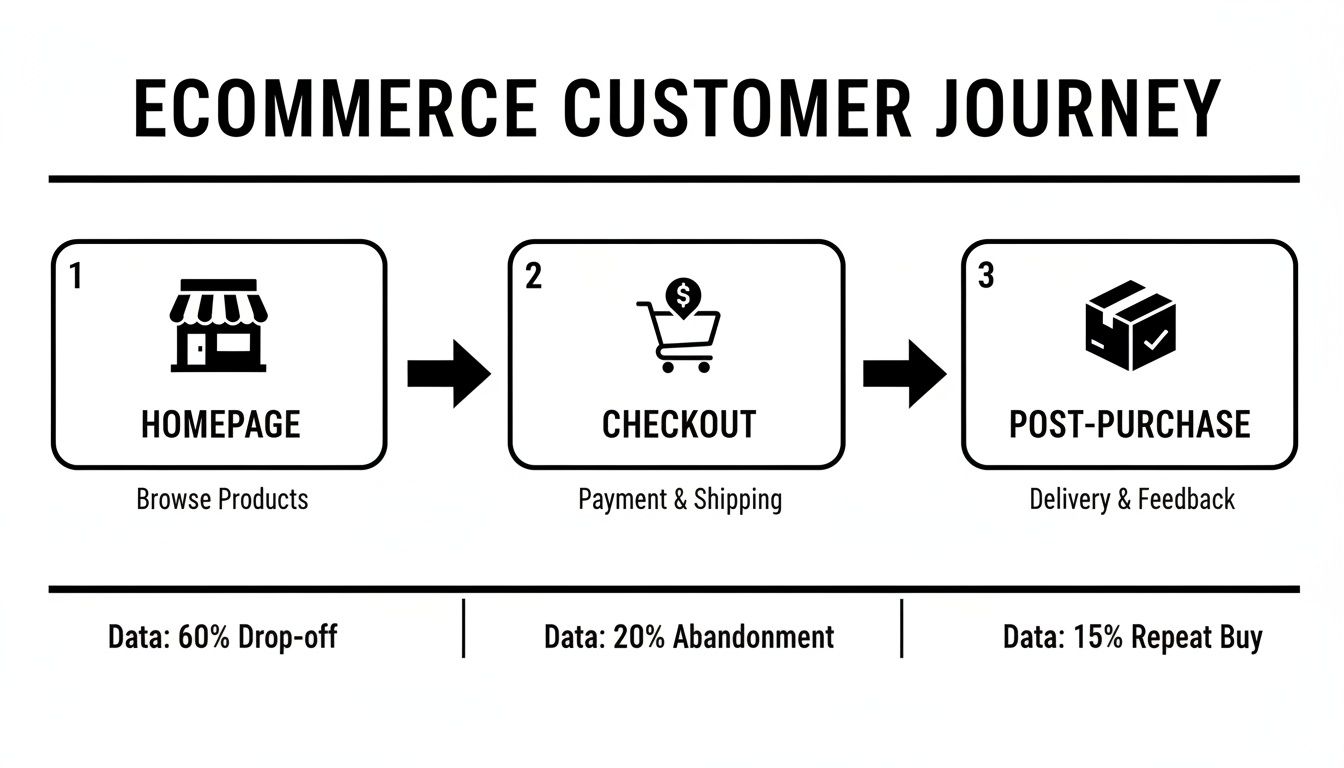
The infographic above breaks down how a customer moves from discovering your homepage to completing their journey after the purchase, highlighting how each step is a critical link in the chain.
From Friction to Flow
Once you have this map laid out, you can start auditing your own store’s experience. Where do people get stuck? Maybe your product pages are a bit light on reviews (a Consideration friction point), or your checkout process has way too many steps (a Purchase friction point).
Each stage presents a new chance to strengthen your relationship with the customer. A great starting point is to dive deeper into how you can optimize each step of the ecommerce customer journey for maximum impact.
By systematically finding and fixing the weak points in your map, you’re not just plugging holes. You’re building a smooth, enjoyable path that customers will actually want to travel again and again.
How to Optimize Your Most Critical Touchpoints
Mapping out the customer journey is a great start, but to really move the needle on your customer experience in ecommerce, you have to get your hands dirty and fix the moments that matter most. These touchpoints are the make-or-break interactions where a shopper decides if they trust you enough to pull out their wallet.
Get these moments right, and you build momentum straight to a sale. Get them wrong, and you’re just sending traffic to your competitors.
We’re going to focus on three high-impact areas that truly define how a customer feels about your brand: your site’s navigation, your product pages, and, of course, the checkout. Each one is a test of your store’s competence and reliability.
Craft an Effortless Website Experience
Your website’s user experience (UX) and navigation are the absolute foundation of the entire shopping journey. It’s simple: if customers can’t find what they’re looking for, nothing else you do matters. The goal is to make discovery feel natural and easy, not like some frustrating treasure hunt.
Think about walking into a physical store with unlabeled aisles and products thrown everywhere. You’d turn around and leave, right? Your website is no different. A confusing layout creates instant friction and tanks your credibility before a shopper even lays eyes on a product.
Here are the key things to nail for a smooth navigation experience:
- Intuitive Menus: Keep your navigation menu simple, logical, and predictable. Use clear categories that your actual customers would use, not your internal company jargon.
- Smart Search: A powerful on-site search is non-negotiable. It needs to handle typos, offer suggestions, and provide useful filters so people can quickly narrow down the options.
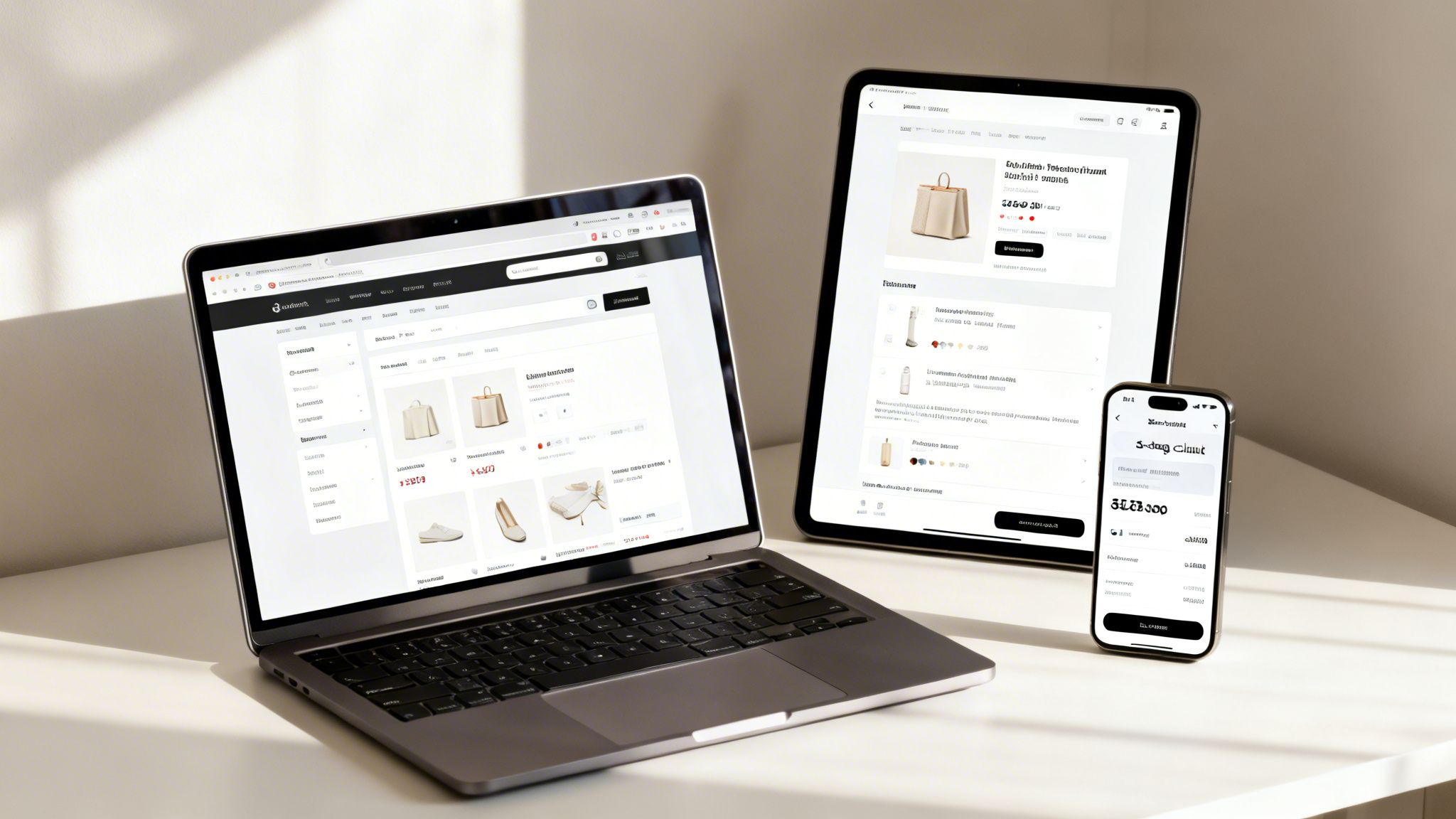
- Mobile-First Design: The majority of your traffic is probably on a phone, so your site has to work flawlessly on a small screen. That means buttons must be easy to tap, text has to be readable without squinting, and the whole experience should feel thumb-friendly. A seamless UX isn’t just a nice-to-have; it signals professionalism and respect for your customer’s time, setting a positive tone for everything that follows.
Build Confidence with Compelling Product Pages
Once a shopper lands on a product page, this is where the magic needs to happen. Your job is to turn their casual interest into a real desire to own that item. The page has to answer every potential question, build unshakable trust, and tell a story that makes the customer feel confident they’re making a great choice.
A great product page is more than a list of specs. It’s a sales pitch, a user manual, and a wall of social proof all rolled into one. It has to bridge that digital gap between just seeing a product online and actually holding it in your hands.
To get your product pages converting, they absolutely must include:
- High-Quality Visuals: Don’t skimp here. Use crystal-clear images from every angle. Even better, add videos showing the product in action. This gives people a real sense of its size, function, and what it’s like in the real world.
- Detailed and Persuasive Descriptions: Go beyond the basic features. Explain the benefits of those features. How does this product solve a problem or make the customer’s life better? Tell that story.
- Visible Social Proof: Customer reviews, star ratings, and user-submitted photos are pure gold. They offer unbiased validation from real people, which builds immense trust and helps new buyers get over that final hurdle of hesitation. A well-crafted product page removes all doubt and makes clicking “Add to Cart” feel like the most natural next step.
Perfect the All-Important Checkout Process
The checkout is the final—and most fragile—step in the entire journey. This is where a shopper’s commitment is truly tested. Any friction at all can undo all the hard work that got them to this point. In fact, a slow, confusing, or untrustworthy checkout is the number one killer of sales.
Think of it like the last mile of a marathon. No one who has come this far is going to quit unless a major obstacle gets in their way. Surprise shipping costs, being forced to create an account, or not seeing their preferred payment option are all massive obstacles that destroy conversions.
Fixing your checkout isn’t just about making it easier to use; it’s about creating a secure and reassuring environment where customers feel completely safe handing over their information. Even the slightest hint of complexity or insecurity will send them running for the hills.
Transforming the Checkout with Advanced Tools
https://www.youtube.com/embed/ZPo8n66_6-w
The checkout is the final moment of truth in the customer experience in ecommerce. It’s the last hurdle standing between a curious browser and a loyal customer. Even the smallest bit of friction here can send a shopper heading for the hills, leaving their cart behind for good. A standard, one-size-fits-all checkout works, but it rarely makes a customer feel special.
Luckily, modern tools let you go far beyond a basic transaction. Instead of seeing the checkout as just a payment form, you can turn it into a powerful, high-conversion machine that’s perfectly suited to specific campaigns, customers, and situations.
Moving Beyond the Standard Checkout
Think of the standard checkout process as a generic self-service kiosk. It gets the job done, sure, but it’s impersonal and clunky. Advanced tools, like Checkout Links for Shopify, are more like a personal concierge, guiding specific customers through a fast-tracked process designed just for them.
The whole idea is to remove unnecessary steps and solve problems before they even happen.
Let’s say you’re launching a flash sale. The old way involves telling customers to go to your site, find the product, add it to their cart, and hopefully remember to type in a discount code. With a dynamic link, you can send them a single link that zips them straight to a pre-filled cart with the discount already applied. The journey from “I want that” to “It’s on its way” becomes one simple, satisfying click.
This isn’t just about making things easier; it’s about showing the customer you get them. You’re meeting them right where they are—on Instagram, in an email, or via an influencer—and making the purchase feel like a seamless part of that conversation.
Practical Scenarios for a Smarter Checkout
The real magic of these tools shines when you put them to work in the real world. They let you build unique buying paths for different marketing channels and customer groups, turning a simple transaction into a well-oiled conversion engine.
Let’s look at a few ways this changes the game:
- Influencer Marketing Campaigns: Give your partners a unique link that automatically applies their exclusive discount. When their followers click it from a TikTok video or Instagram Story, they land on a checkout page with the right product and price, ready to go. This makes buying effortless and attribution a breeze.
- Flash Sales and QR Codes: Planning a limited-time offer? Create a scannable QR code for your pop-up event or social media post. A quick scan takes customers to a pre-loaded cart with the sale items, primed for an impulse buy.
- Abandoned Cart Recovery: We’ve all seen those abandoned cart emails. They work, but often make the customer start over. A dynamic link in your recovery email can bring them back to their exact cart, details and all, making it ridiculously easy to finish what they started.
This is a fundamental shift in strategy. You’re no longer passively waiting for customers to find their own way through the final steps. Instead, you’re actively building them the perfect bridge to get across the finish line.
Advanced Tactics for Maximizing Conversions
Once you’ve got the basics down, advanced checkout tools open up even more sophisticated ways to drive sales and elevate the customer experience. These tactics give you granular control over the buying journey.
H3: A/B Test Your Offers One of the most valuable techniques is A/B testing offers. Can’t decide between a 15% off discount and a Free Shipping promotion? Easy. Create two different checkout links, each with one of the offers, and send them to different segments of your audience. The analytics will show you in black and white which incentive actually closes more sales, taking the guesswork out of your strategy.
H3: Create Exclusive Product Drops Another powerful feature is passcode protection for exclusive drops. If you’re launching a limited-edition product for your VIPs, you can lock the checkout link with a passcode. This builds a real sense of exclusivity and ensures only your most dedicated fans get access, turning a standard product launch into a must-attend event.
Standard Shopify Checkout vs. Enhanced Checkout
To really see the difference, it helps to put the standard experience side-by-side with an enhanced one. A standard checkout is a solid foundation, but advanced tools build a much more persuasive and customer-friendly experience on top of it.
| Feature | Standard Shopify Checkout | Enhanced with Checkout Links |
|---|---|---|
| Cart Creation | Customer must manually add items. | Link can pre-fill the cart with specific products. |
| Discounts | Customer must remember and type in a code. | Discount is automatically applied through the link. |
| Campaigns | Generic experience for all marketing channels. | Create unique links for email, social, and influencers. |
| Exclusivity | No built-in way to restrict access to products. | Passcode protection for VIP drops and exclusive sales. |
| Testing | Difficult to A/B test different offers directly. | Easily create and track multiple offer links to see what works. |
As you can see, the enhanced approach offers a level of precision and personalization that a one-size-fits-all checkout simply can’t match.
Ultimately, transforming your checkout is about changing your mindset. It’s no longer just the last page in the shopping journey; it’s a strategic asset you can use to personalize the customer experience in ecommerce, drive more conversions, and build a stronger connection with every single person who buys from you.
Mastering the Post-Purchase Experience to Build Loyalty
The sale is done. The payment went through. For a lot of online stores, that’s where the customer journey ends. But if you’re serious about creating a standout customer experience in ecommerce, this is exactly where the real work begins. The post-purchase phase is your single best chance to turn a first-time buyer into a loyal fan for life.
Think about it from the customer’s perspective. They’ve just handed over their money, and now they’re in that state of excited anticipation. They’re waiting to see if you’ll deliver on your promise. Nailing this part of the experience reassures them they made the right choice and makes them feel valued, not just like another order number.

It all starts the second they hit “Confirm Order.” A generic, transactional receipt is a massive missed opportunity. Instead, that first email should celebrate their purchase, clearly outline what happens next, and let your brand’s personality shine through. Proactive communication is everything here—it builds trust and manages expectations while they wait.
Turning Communication into Connection
Radio silence after a customer places an order is a recipe for anxiety. Did my order even go through? When is it going to ship? You can head off this “buyer’s remorse” with a communication strategy that keeps them in the loop and genuinely engaged. It’s about moving beyond basic, robotic notifications to create an experience that feels reassuring and maybe even a little bit fun.
Here’s how to level up your post-purchase communication:
- Order Confirmation: Don’t just list the items they bought. Remind them why they made a great choice and give them a clear, honest timeline for shipping and delivery. This is also a perfect spot to link to a helpful FAQ or related blog content.
- Shipping Updates: Be the one to reach out first. Send proactive updates when the order ships, when it’s out for delivery, and once it has officially arrived. This transparency shows you’re on top of things and drastically cuts down on “Where’s my order?” support tickets.
- The Unboxing Experience: The moment that package lands on their doorstep is a huge deal. A thoughtfully packed order—maybe with a handwritten thank-you note or a small freebie—can create a truly memorable moment that people get excited to share on social media. By mastering your follow-up, you make the whole experience feel personal and attentive. For a deeper dive, check out our guide on creating an effective post-purchase email strategy.
From Support Tickets to Lasting Loyalty
Even when you do everything right, problems can still pop up. The way you handle them is what separates the good brands from the great ones. A simple, hassle-free returns process and quick, friendly support aren’t just costs—they are powerful investments in a customer’s lifetime value. In fact, a clear, easy return policy can give a hesitant shopper the confidence they need to click “buy” in the first place.
In the world of e-commerce, customer expectations for support are sky-high. A staggering 52% of global shoppers expect support to be available 24/7. And they want it fast: 32% want a response within just one hour, while another 38% expect an immediate answer. Slow responses are a deal-breaker, as 72% of shoppers want their issue resolved in a single interaction.
Beyond great shipping and support, you can foster long-term loyalty by implementing a reward points program to encourage repeat business. When you consistently go above and beyond after the sale is made, you create a powerful cycle of happy, repeat customers who become your most effective engine for growth.
Got Questions About Ecommerce CX? Let’s Unpack Them.
Diving into the world of e-commerce customer experience can feel overwhelming. As a Shopify merchant, you’re not just looking for theories; you need practical answers that actually move the needle. Let’s tackle some of the most common questions that pop up when you’re working to make your store’s experience unforgettable.
What’s the One Thing I Absolutely Have to Get Right?
Every part of the customer journey matters, but if you have to focus on one thing, make it the checkout process. This is the final, make-or-break moment where a browser becomes a buyer. It’s the grand finale of their entire shopping trip.
Think about it: a clunky, confusing, or untrustworthy checkout is the single biggest reason people abandon their carts. That’s why smoothing out this one step—making it fast, simple, and secure—delivers the biggest and quickest wins. Everything else you do leads right to this moment.
How Can a Small Shop Compete with the Big Retail Chains on CX?
You can absolutely go toe-to-toe with the giants. Your secret weapons? Personalization and genuine connection. These are the very things that massive, faceless corporations struggle with. Your smaller size is your biggest advantage, allowing you to create a truly special experience from the first click to the final unboxing.
Here’s where you can really shine:
- Add a Human Touch: A simple, handwritten thank-you note tucked into a package can make a customer for life.
- Craft a Memorable Unboxing: Make opening your package feel like unwrapping a gift, not just receiving a product.
- Engage Directly: When you reply to comments on social media, be a real person, not a corporate bot. Weave your brand’s story into everything you do to build a real community. That’s a kind of customer experience in ecommerce that no retail giant can ever duplicate.
How Do I Actually Measure the ROI of Better CX?
Measuring the return on your CX efforts isn’t as fuzzy as it sounds. You just need to watch the right business metrics. When these numbers go up, you know your work is paying off.
Keep a close eye on these three indicators:
- Customer Lifetime Value (CLV): Are people spending more with you over the long haul?
- Conversion Rates: Is a higher percentage of visitors making a purchase?
- Customer Retention Rate: Are you turning one-time buyers into repeat customers? When you run a specific campaign, like a flash sale using special checkout links, the ROI is even clearer. You can track the exact sales and conversion rate from those links, giving you a direct, dollars-and-cents answer to “Did this work?”
Ready to turn your checkout from a conversion killer into your biggest asset? With Checkout Links, you can create dynamic, pre-filled, and discount-ready links in seconds. See how top Shopify merchants are using it to rescue abandoned carts and drive more sales at CheckoutLinks.com.