Conversational text messaging is all about having a real, two-way dialogue between your brand and a customer. It’s a huge leap from the old-school, one-way promotional blasts that just shout into the void.
Instead of simply announcing a sale, this approach focuses on genuine interaction. It’s about being there to answer questions, offer a helping hand with support, and gently guide customers through their buying decisions. What you get is a much more human connection that turns a simple text into a conversation that builds real trust and loyalty.
Moving Beyond Blasts to Real Conversations
Let’s face it: nobody likes getting generic SMS blasts. They feel like digital junk mail—the online equivalent of a salesperson yelling a pitch into a crowded room and hoping someone, anyone, listens. Conversational text messaging for Shopify stores is a completely different game, built on one simple truth: customers want a dialogue, not a monologue.
This is about ditching one-way promotions and creating authentic, back-and-forth interactions that actually build a relationship. The psychology behind it is straightforward. A personal, helpful text feels like you care. A robotic, generic ad feels cold and is incredibly easy to ignore. This shift from transactional to relational has a direct, positive impact on both customer loyalty and your sales.
The Power of Two-Way Dialogue
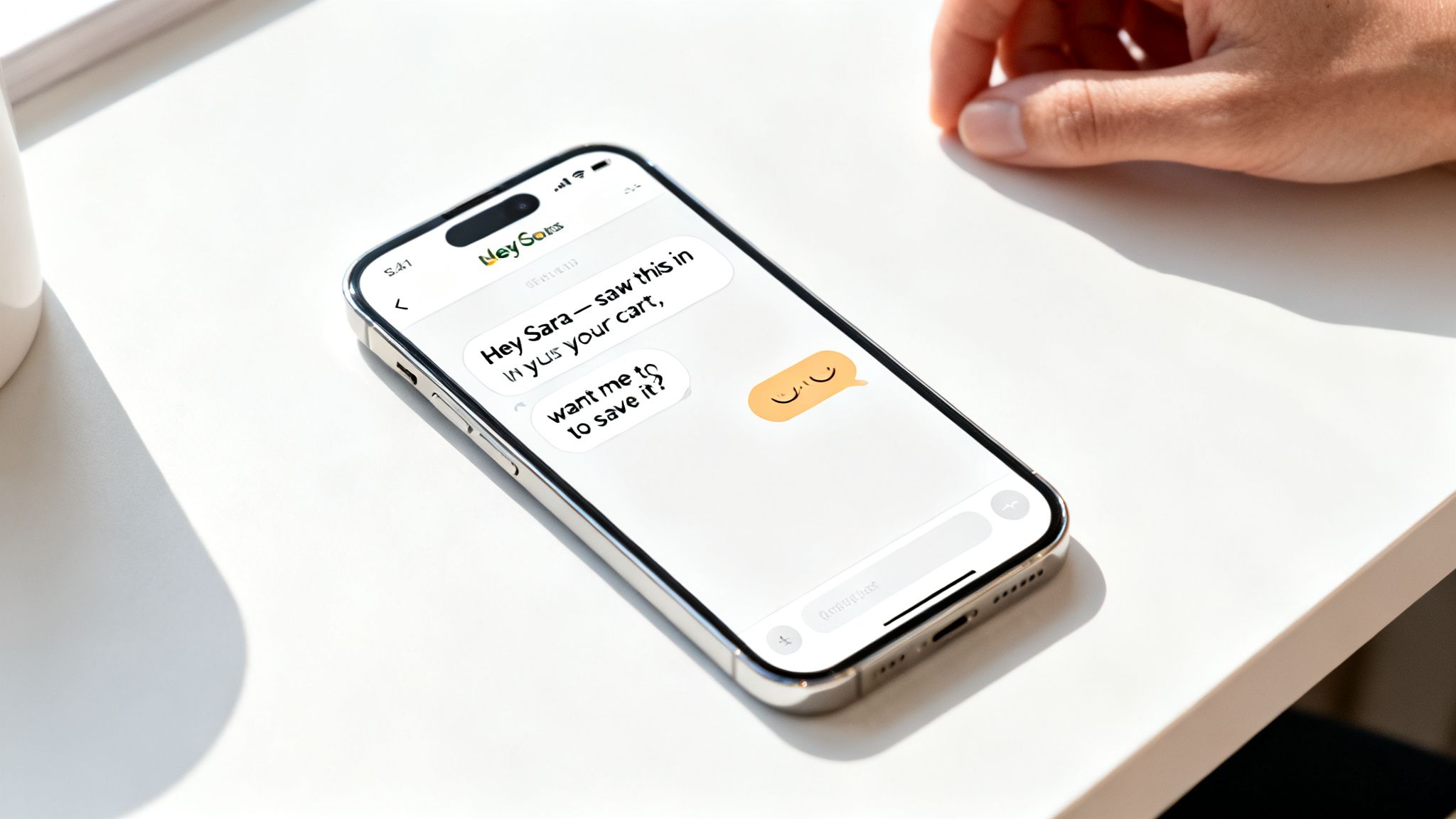
This strategy completely changes how you handle key moments in the customer journey. Take cart recovery, for instance. It goes from being a forgettable automated reminder to a genuinely supportive conversation.
See the difference? That small change cracks the door open for a real conversation. It lets you get ahead of any potential issues and offer real value before you even ask for the sale. It’s a subtle but incredibly powerful shift from just broadcasting a message to actually connecting with someone.
Why Texting Is the Perfect Channel
The instant nature of SMS makes it the perfect place for these kinds of interactions. The numbers don’t lie—texting is a direct line to your customers that just works.
SMS consistently sees 98% open rates, with most people reading messages within just a few minutes. That blows email’s typical 20-30% open rate out of the water. Even better, SMS response rates can hit an incredible 45%, while email often struggles to get 6%. When it comes to starting a real dialogue, texting is the undisputed champion.
If you’re serious about moving beyond one-way communication, it’s also worth exploring how tools like Shopify live chat can help you build these real-time conversations across all your customer touchpoints.
Throughout this guide, we’ll keep building on this human-first foundation, showing you how to create campaigns that resonate, earn trust, and ultimately drive more sales for your Shopify store.
Building Your First Conversational Campaign
A great campaign begins long before you hit send. If you want to move beyond generic text blasts and start having real, revenue-driving conversations, you need a blueprint. Before you write a single word, you need a solid plan that defines who you’re talking to and what success actually looks like.
Forget vague goals like “increase sales.” Get specific. Are you aiming for a 15% drop in abandoned carts this quarter? Or maybe a 25% conversion rate on your next flash sale? When you set concrete, measurable objectives like these, your entire campaign suddenly has a clear purpose.
Define Your Goals and Audience Segments
First things first: what are you trying to accomplish? The answer will shape every single message you send.
- Slash Cart Abandonment: This is about targeting shoppers who get right to the finish line but don’t cross it. The goal isn’t to be pushy; it’s to re-engage them with a genuinely helpful text.
- Drive Flash Sale Conversions: Here, you’re creating urgency and excitement around a limited-time offer to spark immediate purchases.
- Boost Customer Lifetime Value: This means engaging past customers with thoughtful post-purchase follow-ups and exclusive offers that keep them coming back. With your goals in place, it’s time to segment your audience. Lumping a VIP customer in with a first-time window shopper is a massive missed opportunity. Create distinct groups based on their purchase history, how often they engage, or even specific products they’ve viewed. This is how you achieve real personalization that makes each person feel seen.
Map Critical Customer Touchpoints
Now, pinpoint the exact moments in the customer journey where a personal text can make the biggest difference. Think about where friction happens or where an opportunity is being missed. A well-timed message during a moment of hesitation can be the deciding factor between a lost sale and a loyal fan.
Consider these key touchpoints to start:
- Welcome Message: Your very first interaction after someone new opts in. Make it count.
- Cart Abandonment: This is a crucial moment to overcome an objection or just offer a helping hand.
- Post-Purchase Check-in: The perfect time to build loyalty, gather feedback, or just say thanks.
- Re-engagement: A gentle nudge for customers who haven’t stopped by in a while. This is where the magic happens. You’re not just sending messages; you’re starting conversations at the most impactful moments.
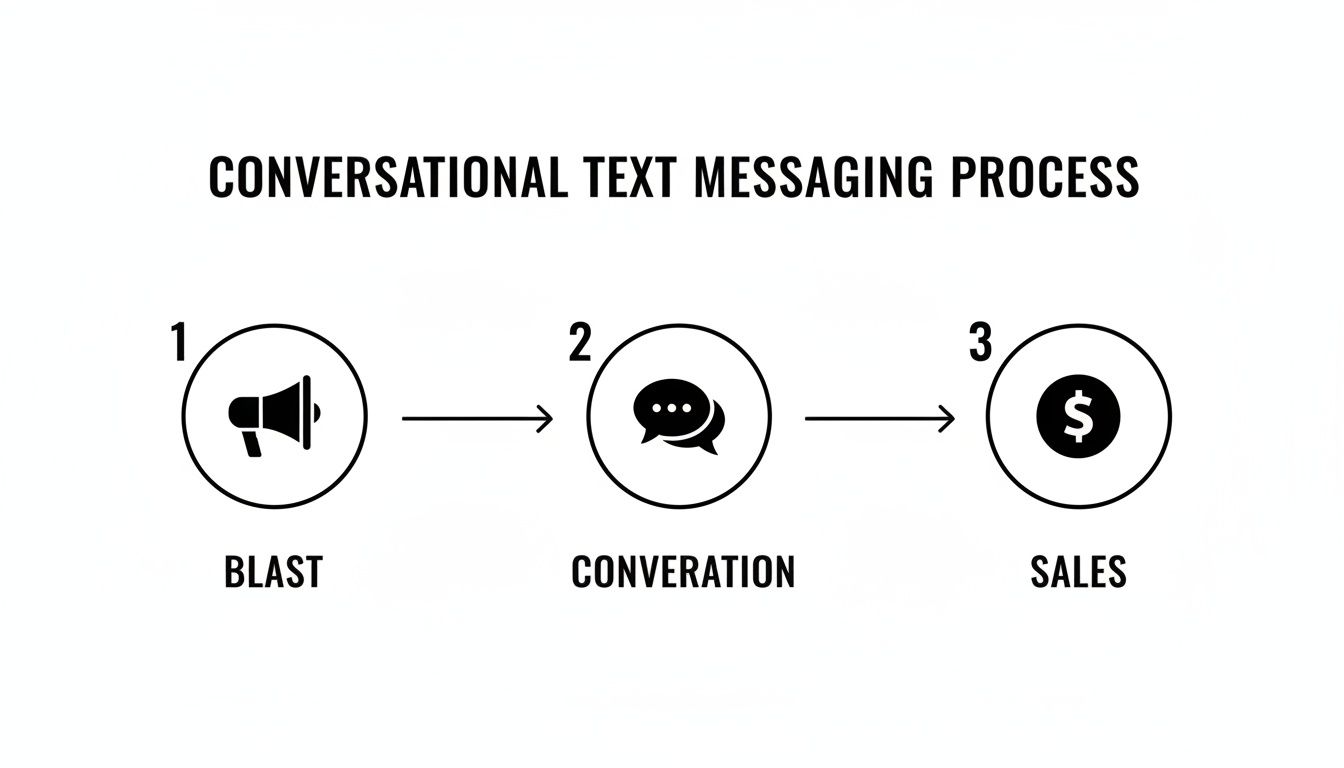
The flow is simple but incredibly powerful: an initial message (the “blast”) opens the door for a personalized dialogue (the “conversation”), which then leads directly to a purchase (the “sale”).
For each touchpoint, figure out exactly how you’ll kick off the chat. This is where having the right tools is non-negotiable. By using dynamic checkout links, you can embed a pre-loaded cart—complete with a special discount—directly into your text message. It creates a completely frictionless path from conversation to conversion, turning a simple chat into an immediate, personalized buying experience. You can dig deeper into these powerful SMS marketing conversion tactics for Shopify to really dial in your strategy.
With a solid plan in hand, you’re finally ready to start crafting messages that truly connect.
Writing Texts That Sound Human, Not Robotic
The whole point of conversational text messaging is to feel personal. If your messages sound like they were written by a corporate robot, you’ll lose your audience before the conversation even starts. The goal is to find that sweet spot where your messages reflect your brand’s unique personality but still feel like they’re coming from a real, helpful person.
This means dropping the stiff, formal language. Forget the corporate jargon. Think about how you’d text a friend about a cool product you just found—that’s the vibe you’re after. Keep your sentences crisp, use contractions (like “you’re” and “it’s”), and don’t shy away from a well-placed emoji to add a bit of warmth.
Crafting Your Brand Voice for SMS
Before you type out a single message, you have to figure out your brand’s texting persona. Are you playful and witty? Supportive and informative? Whatever it is, that voice needs to stay consistent across every campaign, from the initial welcome text to a post-purchase check-in.
To get those human-sounding texts just right, it’s all about understanding the details of your brand’s personality. This is where you can really dive into Customization and Personalization to make every single text feel like it was written just for that customer.
Think about these small but crucial elements:
- Word Choice: Do you lead with “Hey” or “Hello”? Is a product “awesome” or “excellent”?
- Punctuation: Are you an exclamation point person to show excitement? Or do you keep it cool with periods?
- Emoji Use: Which emojis actually fit your brand? A simple smiley face works for almost anyone, but something like a rocket emoji (🚀) might be perfect for a brand all about speed and innovation. Nailing this down is what makes your automated messages feel authentic and on-brand, helping you build a much stronger connection with every text you send.
Message Templates for Key Scenarios
While every message should feel unique, you don’t have to start from scratch every single time. Building a solid set of templates for common situations is a smart way to stay efficient and consistent. Just remember, these are starting points, not rigid scripts to be copied and pasted.
Here are a few templates for different campaigns, designed to be adapted to your brand’s voice and integrated with powerful Checkout Links.
Conversational Campaign Message Templates
The table below breaks down some message ideas for key e-commerce scenarios. Notice how each one aims to start a conversation while seamlessly integrating a dynamic checkout link to make purchasing as easy as possible.
| Campaign Type | Message Template Example | Checkout Links Integration Tip |
|---|---|---|
| Cart Recovery | Hey [FirstName]! Saw you left the SolarGlow Lamp in your cart. Any questions about it before you grab it? Happy to help! | Embed a dynamic link that takes them directly to their pre-loaded cart. For an extra nudge, you can pre-apply a small “welcome back” discount. |
| Welcome Message | Welcome to the [BrandName] family, [FirstName]! So glad you’re here. As a thank you, here’s 15% off your first order: [Link] | Use a link that automatically applies their unique welcome discount at checkout. This removes all friction—no need to copy and paste a code. |
| Post-Purchase | Hi [FirstName], your [ProductName] is on its way! We’re so excited for you to get it. In the meantime, here’s a quick setup guide: [Link] | Provide a link to a helpful resource, like a blog post or video, to build value beyond the sale. This isn’t a sales pitch; it’s about customer care. |
| Flash Sale | SURPRISE! 🤫 Our flash sale is LIVE for the next 4 hours. VIPs like you get first dibs on 30% off everything. Shop now: [Link] | Create a passcode-protected link just for your SMS subscribers. This makes the offer feel truly exclusive and adds a sense of urgency. |
Ultimately, great templates set you up for success, but the real magic comes from making each interaction feel genuine.
This principle is becoming even more important as customer communication moves beyond traditional SMS. Many brands are now using OTT (over-the-top) platforms like WhatsApp to connect with customers. The core idea of sounding human is the same, but the shift in platforms is a big deal. In fact, OTT business messaging is projected to jump from 390 billion messages in 2025 to over 560 billion by 2027. Adapting your conversational strategy for these channels now will put you way ahead of the game.
Using Dynamic Links to Seamlessly Close the Sale
This is the magic moment. It’s where a friendly chat turns into a confirmed sale. The secret isn’t a hard pitch; it’s making the buying process so ridiculously easy that it feels like the most natural next step in the conversation. This is where dynamic checkout links become your most powerful tool.
Instead of just sending a customer back to your homepage to hunt for a product they just told you they wanted, you can send a direct link to a pre-loaded cart. This one simple move eliminates a massive amount of friction, which is the number one killer of mobile conversions. A single tap takes them from your text thread to a checkout page, with their items waiting and a discount already applied.

From Conversation to Checkout in One Tap
The real beauty of dynamic links is their flexibility. You can generate incredibly specific links for different campaigns, customer segments, and goals, turning each text message into a truly personal shopping trip.
We’re talking about going way beyond a basic link to a product page. With the right setup, you can create links that:
- Pre-apply unique discounts: Perfect for rewarding a loyal customer or offering a little “just for you” nudge during a cart recovery chat.
- Load a specific cart: If a customer was asking about putting together an outfit or a product bundle, you can send them a link with all those items already in their cart, ready to go.
- Create passcode-protected access: This is fantastic for VIP-only flash sales. Text your top customers a link that requires a special passcode, making the offer feel genuinely exclusive. This level of personalization proves you were actually listening. You’re not just another brand blasting out links; you’re a helpful assistant making their life easier.
Testing and Tracking for Better Results
Dynamic links are more than just a convenience feature—they’re a data goldmine. Because you can create unique links for different campaigns, customer groups, or even A/B tests, you finally get clear attribution on what’s actually driving sales.
Imagine you’re running a test for your abandoned cart flow. You could set up:
- Group A: They get a link with a 10% discount automatically applied.
- Group B: They receive a link offering free shipping instead. By tracking the conversion rates from each specific link, you get concrete data on which offer truly motivates your audience. This removes the guesswork and lets you build your strategy on what your customers actually do, not what you think they’ll do. Mastering how to send links effectively in your SMS campaigns is a game-changer for maximizing revenue from your texts.
When you focus on the customer experience first, these powerful links can transform casual text message chats into a consistent, reliable source of revenue for your Shopify store.
Navigating Compliance and Measuring What Matters
You can craft the most brilliant, engaging text messages in the world, but if you don’t nail compliance and keep a close eye on your data, your entire strategy can backfire. Seriously. Getting this right isn’t about jumping through legal hoops; it’s about building genuine trust with your customers from the very first text.
https://www.youtube.com/embed/AgLqVU6BFPA
The golden rule here is explicit consent. I can’t stress this enough. Your customers have to knowingly and clearly agree to get marketing messages from you. This is the cornerstone of regulations like the Telephone Consumer Protection Act (TCPA), and it’s absolutely non-negotiable.
Make your opt-in process crystal clear. Just as important, give them a simple, obvious way out. The standard “Reply STOP to unsubscribe” is there for a reason—use it.
This respect pays huge dividends. Think about it: people send four times more texts daily than emails, and a whopping 63% of them stick to their phone’s native SMS app over other messengers. For brands that play by the rules and respect the channel, the opportunity is massive. You can discover more insights into consumer texting habits and see for yourself why they prefer it for brand communication.
Proving the Value of Your Conversations
Once you’ve got your compliance on lockdown, it’s time to prove your work is actually, well, working. Forget about vanity metrics like open rates—they don’t mean much in the world of SMS. What you need to do is connect your conversations directly to revenue. That’s the only way to know what’s truly moving the needle.
These are the metrics I live by:
- Conversion Rate: Out of everyone who got a text, what percentage actually bought something? This is your north star.
- Attribution: Can you point to a specific sale and say with certainty, “This came from that text conversation”? This is where unique, trackable checkout links become your best friend.
- Return on Investment (ROI): Simple math, but incredibly powerful. For every dollar you put into your texting platform and campaigns, how much revenue did you get back? Most modern SMS marketing platforms built for Shopify have analytics dashboards that let you dig deep into this stuff. Use them. Pit one offer against another. For instance, you could A/B test a cart recovery text offering 10% off against one offering free shipping.
By tracking the conversion rate from each unique link, you get undeniable proof of what your audience responds to. That’s how you stop guessing and start investing confidently in strategies that deliver real, measurable results.
Frequently Asked Questions About Conversational Texting
Making the jump to conversational text messaging can feel like a big step, especially if you’re used to firing off traditional SMS blasts. It’s totally normal to have questions about how it all works, what to look out for, and if it’s actually manageable for your team. Let’s tackle some of the most common things Shopify merchants wonder about.
The first thing to get your head around is that this is a whole different ballgame from standard SMS marketing. A regular text blast is really a one-way street—you send out an announcement and just hope people click. Conversational text messaging, on the other hand, is a two-way dialogue.
Instead of pushing a generic promo, you’re having a genuine back-and-forth to help a customer solve a problem or guide them to the finish line.
That human touch builds real trust and, frankly, converts a whole lot better. It’s about helping, not just shouting, and that simple shift makes customers feel seen and valued.
Key Compliance Rules You Can’t Ignore
Compliance can sound like a scary, complex legal maze, but it really boils down to one golden rule: explicit consent. A customer absolutely must know what they’re signing up for and agree to get marketing texts from you. This isn’t just good practice; it’s a legal requirement under regulations like the TCPA.
Here are the non-negotiables you have to get right:
- Clear Opt-In: You need undeniable proof that a customer agreed to receive your texts. No funny business.
- Brand Identification: Every single message has to say who it’s from. Don’t make them guess.
- Easy Opt-Out: Always include a simple way to unsubscribe, like replying with “STOP.” Respecting quiet hours is also a must. A text that lands between 10 AM and 7 PM feels helpful; one that wakes someone up feels invasive. The easiest way to stay on the right side of the law is to use a reputable, compliant messaging platform that handles most of this for you and helps you avoid massive fines.
Can These Conversations Be Automated?
Yes, absolutely—and you should. The most powerful approach is a smart mix of automation and real human interaction. You can set up automated flows for all the common stuff, like welcome messages, abandoned cart reminders, or post-purchase check-ins. This ensures you’re always there at those crucial moments.
The trick is to design your automations to handle the predictable parts of a conversation while always leaving the door open for a real person to step in. If a customer replies with a tricky question that stumps your bot, the system should flag it for a team member to handle. That way, you get all the efficiency of automation without losing the personal touch that makes this channel so effective.
Ready to turn chats into sales? Checkout Links empowers Shopify merchants to create dynamic, personalized checkout links that make buying effortless. Start converting more conversations today