So, what exactly is a product bundle? Think of it less as a sales tactic and more as a curated experience for your customer. It’s the simple act of packaging several related products together and selling them as a single unit, usually for a price that feels like a great deal.
It’s the digital equivalent of a helpful store associate saying, “If you like that, you’ll love this.”
Understanding Product Bundling in E-commerce
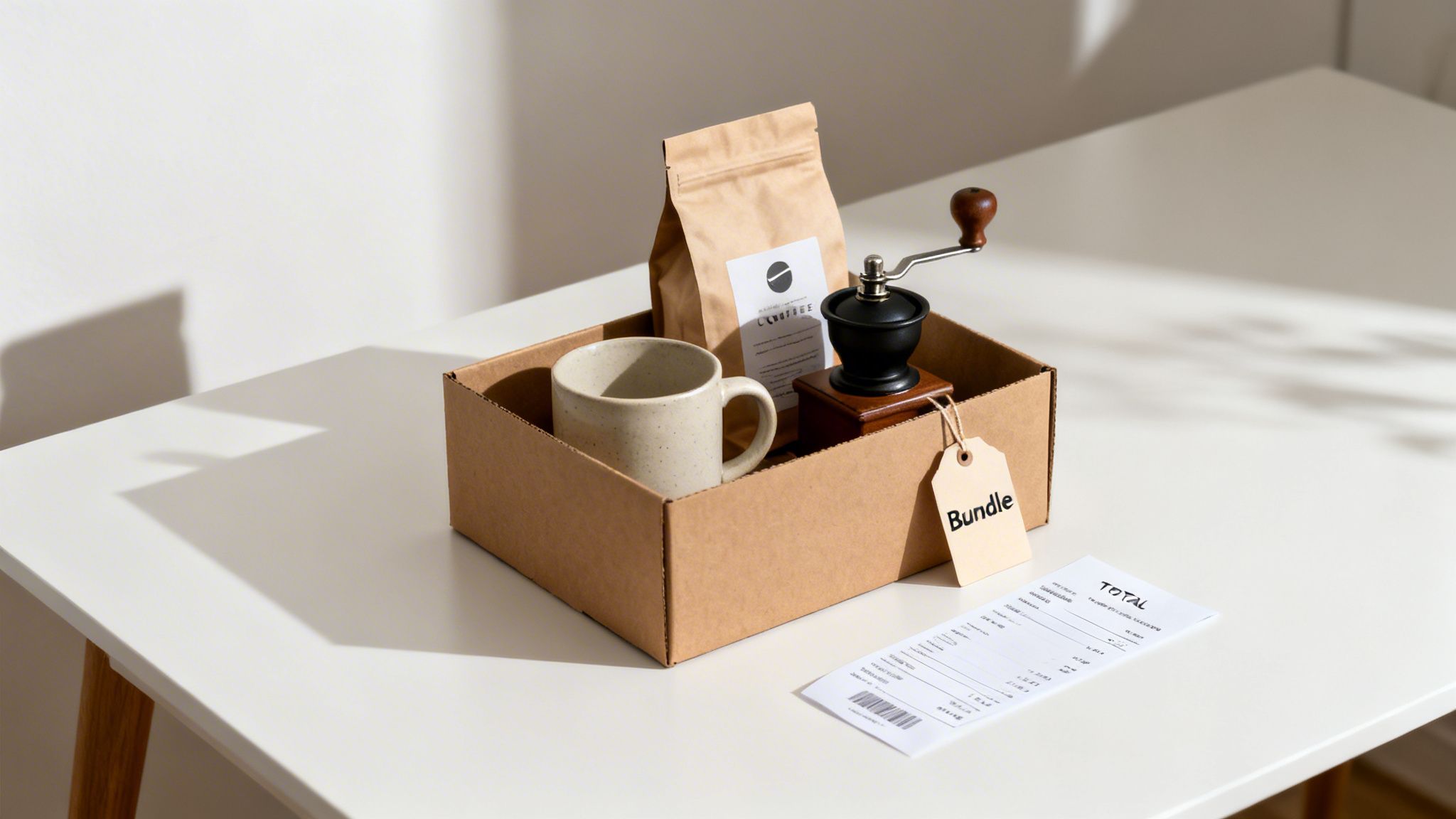
Product bundling isn’t just about moving more inventory. It’s about crafting an offer so compelling that it simplifies the customer’s decision-making process. You’re not just selling individual items; you’re solving a complete problem or fulfilling a broader need. For a deeper dive into the basics, you can check out this helpful article: What Is Product Bundling Explained Simply.
Let’s imagine a Shopify store that sells specialty coffee. Instead of just listing beans, grinders, and mugs separately, they could create a “Home Barista Kit” that includes:
- A bag of their signature house-blend beans
- A high-quality manual coffee grinder
- A stylish branded mug Suddenly, what were three separate buying decisions become one simple, irresistible purchase. The customer gets everything they need for a perfect morning coffee, and the store increases its Average Order Value (AOV) by selling three items at once.
Product Bundling At a Glance
To quickly summarize, here’s how product bundling can immediately impact your Shopify store.
| Concept | Primary Goal | Key Benefit | Typical AOV Increase |
|---|---|---|---|
| Selling multiple items as a single package. | Increase the total value of each customer transaction. | Higher perceived value for the customer and increased revenue for the merchant. | 20-30% or more. |
As you can see, the core idea is straightforward, but its effect on your key metrics is powerful.
The Strategic Value of Bundles
The real magic of bundling is that it’s a win-win. Customers feel smart because they’re getting more for their money, almost like they’ve unlocked a special deal.
For merchants, the benefits are even more profound. Bundles are a fantastic way to introduce a new product by pairing it with a proven bestseller. Got some slow-moving stock? Bundle it with a popular item to clear it out. It also streamlines your marketing—promoting one fantastic offer is far easier than juggling three or four separate product campaigns.
And the numbers back this up. Research consistently shows that brands using strategic bundles can see an immediate 20% increase in sales and, even more impressively, a 30% jump in profits. This happens because bundling can lift your AOV by 20-30% while simultaneously lowering your marketing spend per item sold, making every single transaction more profitable.
The Main Types of Product Bundles to Use
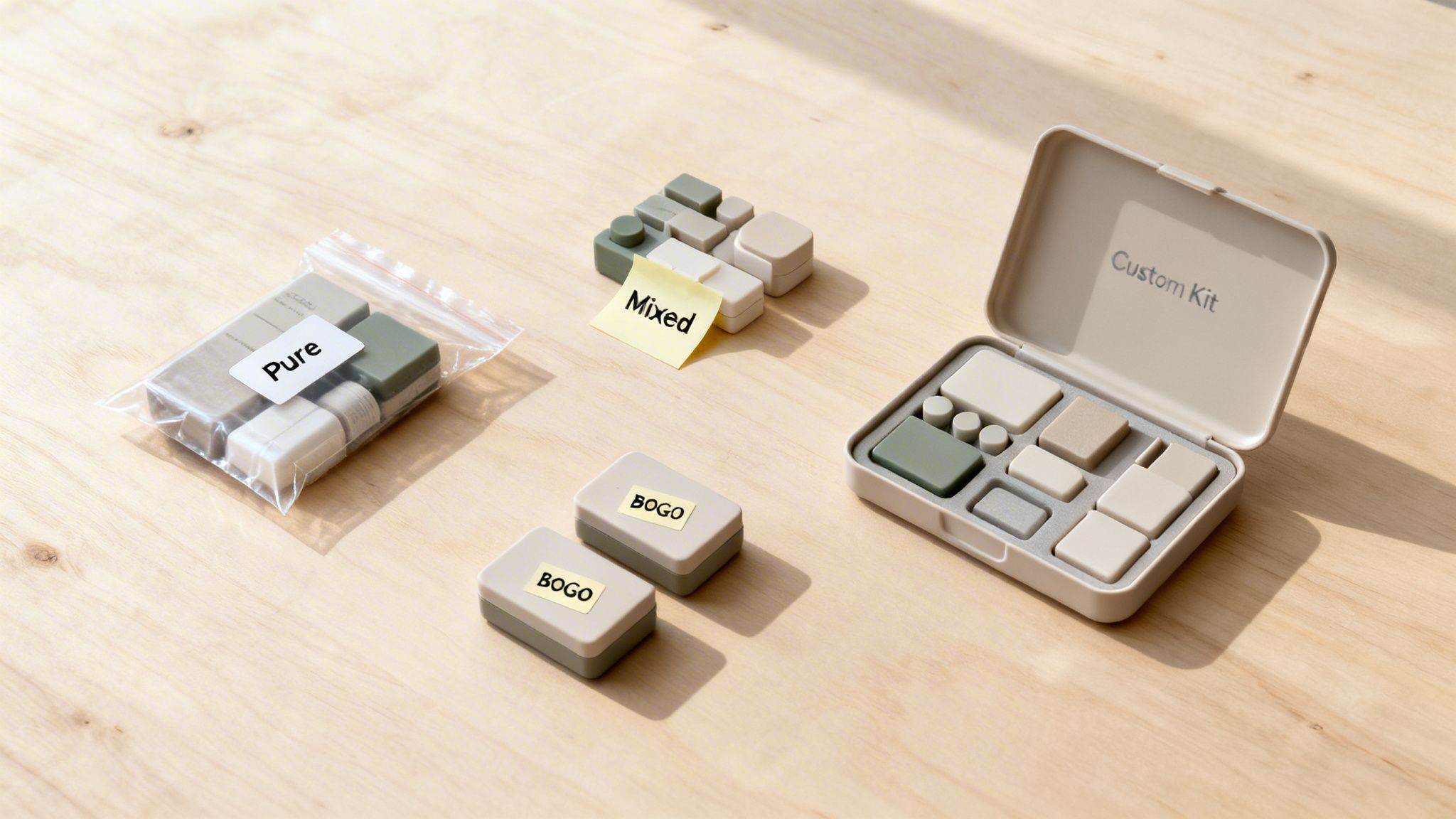
Alright, so you know what a bundle is. But the real magic happens when you figure out which type of bundle is right for your store. This isn’t a one-size-fits-all game.
The best approach depends entirely on your products, your inventory, and your ultimate goal. Let’s walk through the most common bundling strategies you can start using on Shopify and see which one clicks for your brand.
Pure Bundling: The All-or-Nothing Exclusive
A pure bundle is exactly what it sounds like: a set of products you can only buy together. The individual items aren’t for sale on their own. This approach creates an exclusive, all-or-nothing offer that feels special because customers can’t piece it together themselves.
Think of a skincare brand that’s curated a “Complete Morning Routine” set. It might have a cleanser, serum, and moisturizer that are formulated to work perfectly together. By selling them only as a pure bundle, the brand isn’t just selling products; it’s selling a guaranteed result and guiding the customer to the best possible experience.
Mixed Bundling: The Best of Both Worlds
On the flip side, mixed bundling is all about flexibility. You offer products for sale individually, but you also give shoppers the option to buy them together as a bundle for a sweet discount. This strategy is brilliant because it caters to two different types of buyers at once: the bargain hunter and the person who just needs one thing.
A coffee retailer, for instance, could sell their signature beans, a fancy grinder, and a French press separately. But they could also offer a “Home Barista Kit” with all three for 15% off. Newbies get a fantastic deal on a full setup, while loyal customers can still pop in just to restock their favorite beans. No one gets left out.
This isn’t just theory; it works. Many e-commerce managers see conversion lifts between 15-25% with mixed bundles because they make the buying decision so much easier. In fact, a whopping 80% of customers enjoy being able to compare the bundle price against the individual items to see the value for themselves.
This strategy has come a long way from its early days in airline packages to the dynamic offers we see today, which can lead to major profit gains. If you’re curious about the history, you can explore a deeper dive into bundle pricing strategies to see how it’s evolved.
BOGO & Add-On Bundles: The Cart-Boosting Power Plays
Buy-One-Get-One (BOGO) deals and add-on bundles are your go-to tactics for upselling and cross-selling. They’re slightly different, but both work by nudging customers to add just one more thing to their cart.
- BOGO Bundle: Think “Buy a shampoo, get a conditioner for 50% off.” It’s a classic pairing for a reason—it encourages the sale of a related item the customer might have otherwise skipped.
- Add-On Bundle: This is your point-of-purchase upsell. “Add a protective case to your new phone for only $10.” It’s an easy, low-friction “yes” that instantly increases the order value. These types of bundles are fantastic for moving specific inventory or introducing customers to products that perfectly complement what they’re already buying.
Customizable Kits: Let Your Customers Be the Chef
Finally, we have customizable kits, often called “build-your-own” bundles. This is where you hand the reins over to the customer. They get to pick and choose from a pre-selected list of items to create their own unique package, usually for a set price.
A beauty brand could offer a “Build-Your-Own Makeup Box” where shoppers choose any three items—say, a lipstick, an eyeshadow, and a mascara—for one price. This interactive experience feels personal and fun, which is a powerful way to build customer satisfaction and keep them coming back.
Benefits vs. Risks: Is Product Bundling Right for You?
Every smart business move has its upsides and its potential pitfalls, and product bundling is no different. It can be a powerful way to grow your store, but you need to go in with your eyes open. Let’s break down what you stand to gain and what you need to watch out for.
The most obvious win? A higher Average Order Value (AOV). Plain and simple, bundles encourage shoppers to buy more at once. Instead of just picking up a single item, they’re drawn to a curated collection, instantly boosting the value of their cart. If you want to dive deeper into this, we have a whole guide on how to increase your Average Order Value with proven strategies.
Bundling is also a secret weapon for managing your inventory. Got a product that’s gathering dust? Pair it with a bestseller. This is a classic tactic for moving slow-selling stock, clearing out your warehouse, and turning what could have been a loss into a profit.
More Than Just a Sale: Building Loyalty
Great bundles do more than just make a single sale; they help create repeat customers. In fact, bundling is a fantastic tool for customer retention.
That number gets even better when you start personalizing. For stores that create dynamic bundles based on a customer’s past purchases, that figure can jump to an impressive 35%. When you consider that cart abandonment rates can hit 70%, offering a relevant bundle at the right moment can be the key to turning a hesitant shopper into a loyal fan. For a closer look at the data behind this, you can explore more insights on bundle pricing strategies.
The Other Side of the Coin: Potential Risks
Of course, it’s not all upside. The single biggest risk with bundling is accidentally torpedoing your profit margins. If your bundle discount is too deep, you might end up losing money on every sale. This is especially true if you’re bundling low-margin items. You absolutely have to do the math and calculate the total cost of goods sold (COGS) for every bundle to make sure it’s a financial win.
Then there’s the operational side of things. Managing inventory for bundles can get complicated fast. When a bundle sells, your inventory system has to know to deduct stock for each item in that bundle. Without the right app or setup, you risk overselling individual products, leading to stockouts and unhappy customers.
Returns can also become a headache. You need a clear policy from day one:
- Can customers return just one piece of the bundle?
- Or do they have to send the whole thing back?
- If they only return one item, how will you calculate the refund? Thinking through these logistics before you launch will save you and your customers a ton of frustration down the road.
Benefits vs. Risks of Product Bundling
To make it easier to see the full picture, here’s a side-by-side comparison. This overview can help you weigh the pros and cons as you plan your bundling strategy.
| Potential Benefit | Potential Risk | How to Mitigate Risk |
|---|---|---|
| Increased Average Order Value (AOV) | Decreased Profit Margins | Calculate COGS for every bundle and set a minimum profit threshold. Test different discount levels. |
| Move Slow-Selling Inventory | Operational Complexity | Use a Shopify app designed for bundles to automatically sync inventory across components. |
| Higher Customer Retention & Loyalty | Confusing Return Process | Create a clear, simple return policy specifically for bundles and communicate it on product pages. |
| Introduce New Products | “Choice Paralysis” for Customers | Keep bundles focused and easy to understand. Avoid overwhelming customers with too many options in one bundle. |
Ultimately, a successful bundling strategy comes down to balance. By preparing for the potential risks, you can confidently build offers that grow your business without creating backend nightmares.
How to Create Powerful Bundles with Checkout Links
It’s one thing to understand what a bundle is, but it’s another thing entirely to turn that idea into actual sales. This is where the rubber meets the road. Using a tool like Checkout Links, you can launch powerful bundle campaigns on your Shopify store without needing to touch a single line of code.
Imagine creating a single, dynamic link that sends customers straight to a checkout page. That page is already pre-filled with your perfectly curated bundle, and any discounts are automatically applied. You’re no longer just hoping customers add the right items to their cart; you’re guiding them directly to the finish line.
Turning Strategy into Action with Dynamic Links
The secret sauce here is the dynamic checkout link. It’s an incredibly effective tool that combines multiple products and a discount into one simple, shareable URL. You just pick the products for your bundle, decide on a discount, and generate your link.
Once you have this link, you can put it anywhere you talk to your customers:
- Social Media: Running a campaign on Instagram or Facebook? Drop a link for your “Weekend Getaway Kit” in your bio. It takes followers directly to a checkout with the bundle ready to go.
- Email Newsletters: Announcing a new “Beginner’s Baking Set” to your subscribers? One click on the link in your email, and they’re instantly at checkout. No more searching or adding items one by one.
- Branded QR Codes: You can even use a QR code on your product packaging or at an in-person event. A quick scan sends customers to a special bundle offer, bridging the gap between your offline and online worlds. This direct-to-checkout approach removes friction and dramatically shortens the path to purchase. To get the most out of this strategy, it’s worth exploring different proven methods for product bundling on Shopify and seeing how they fit with this link-based approach.
Advanced Tactics for Maximizing Bundle Performance
Beyond just creating a basic link, you can get a lot more strategic to fine-tune your offers. For instance, A/B testing becomes incredibly straightforward. You could create two different bundle combinations—say, one with product A+B and another with product A+C—and generate a unique checkout link for each one.
By tracking how each link performs, you can quickly see which bundle your audience actually prefers. This data-driven approach takes the guesswork out of the equation and helps you focus on what’s most profitable.
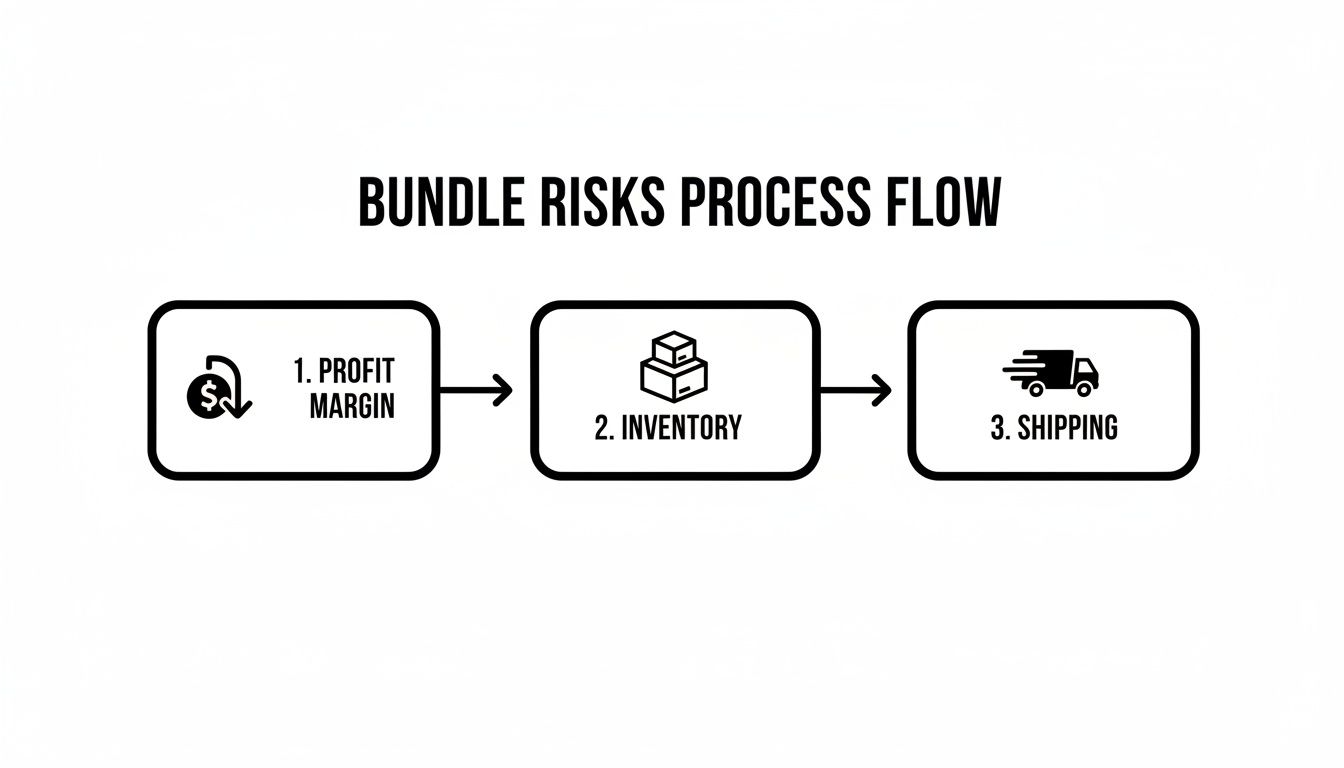
As you can see, there’s a bit to think about. This process flow highlights some key risks to manage when creating a bundle, like the impact on your profit margins, inventory levels, and shipping logistics. Each stage requires careful planning to make sure your bundle strategy is both profitable and operationally smooth.
Ultimately, this approach transforms the abstract idea of a “product bundle” into a concrete, actionable sales strategy. By using checkout links, any Shopify merchant can build, test, and promote compelling offers that boost AOV and keep customers happy. If you’re ready to get started, you can learn more with our guide on how to send links for a step-by-step walkthrough. It’s a powerful method that puts you in control, letting you create targeted campaigns that get results.
Best Practices for a Winning Bundle Strategy in 2026
Putting a bundle together is just the first step. The real magic happens when you optimize it to be both profitable and a genuine delight for your customers. A great bundle strategy isn’t built on guesswork—it’s a smart process of listening to your data, pricing with intention, and merchandising with a bit of flair.
You can’t just slap two products together, add a discount, and expect a home run. But by following a few core best practices, you can create offers that are not just tempting, but also sustainable and powerful tools for growing your business.
Listen to Your Sales Data
Your most valuable insights are already sitting in your Shopify store’s analytics. Before you even think about creating a bundle, you need to dig into your sales reports and find out which products are frequently bought together. This isn’t a suggestion; it’s your customers telling you exactly what they want.
A classic and highly effective approach is pairing a bestseller with a complementary, lesser-known item. This move uses the momentum of your star product to introduce shoppers to something new they’ll probably love, boosting its visibility and sales.
Price Your Bundles Strategically
Pricing is a delicate dance. You need a discount that feels like an irresistible deal, but not so steep that it eats away your profit margins. While there’s no single magic number, a discount in the 10-20% range is a solid and popular place to start.
Before you commit to a price, you absolutely have to do the math. Calculate the combined Cost of Goods Sold (COGS) for every item in the bundle, then subtract that total from your planned bundle price. This simple step ensures you know your exact profit margin and helps you avoid creating a “loss leader” that secretly costs you money on every sale.
Merchandise and Promote with Purpose
How you present your bundle is just as important as what’s inside it. Give your bundles compelling, benefit-focused names that tell a story. For example, instead of a generic “Skincare Set,” try something like “The 5-Minute Morning Glow Kit.”
Next, back it up with high-quality images or videos that show the products being used together. This helps customers visualize the value and see themselves using the items. Once your bundle is live, get the word out across your most important marketing channels.
Here are a few ideas to get you started:
- Homepage Banner: Make your new bundle the star of the show by featuring it on your store’s homepage to grab immediate attention.
- Email Campaigns: Send a dedicated email blast to a specific audience segment, like customers who have previously bought one of the products in the bundle.
- Social Media: Create eye-catching posts or short-form videos demonstrating how the products work together and the benefits they offer.
Track the Right Metrics
To figure out if your bundle strategy is actually working, you need to track its performance. Don’t just count how many bundles you’ve sold; you need to look at how it’s affecting your store’s overall health.
Keep a close eye on these key metrics:
- Average Order Value (AOV): Is the bundle successfully increasing your average cart size?
- Profit Margin: After accounting for COGS and discounts, are your bundles hitting your profit targets?
- Conversion Rate: Are the product pages for your bundles turning visitors into customers at a healthy rate?
- Inventory Velocity: Is the bundle helping you move slower-selling products like you planned? By consistently keeping an eye on these numbers, you can tweak your offers, adjust pricing, and make smart, data-backed decisions. This ensures your bundling strategy will continue to be a powerful engine for growth for years to come.
Common Questions About Product Bundling
As you start thinking about how bundles could work for your Shopify store, some practical questions will pop up. From picking the right products to pair up to handling the nuts and bolts of inventory, it pays to think through the details. Here are some straightforward answers to the questions we hear most often.
How Do I Decide Which Products to Bundle Together?
Start by playing detective in your own store’s data. Your Shopify analytics can show you which items are “frequently bought together”—these are your most obvious starting point. Your customers are already building these bundles for you!
Another great strategy is to pair one of your bestselling products with a less-popular, but highly complementary item. This lets your star product act as an influencer, giving a boost to something new. You can also get creative with themes, like a “New Parent Survival Kit” or a “Summer Grilling Special,” to solve a specific problem or tap into a seasonal mood.
What Is a Good Discount for a Product Bundle?
A discount in the 10% to 20% range is usually the sweet spot. The goal is to make the savings feel significant enough to nudge the customer to buy, but not so deep that it eats away your profit.
Remember, profit is more important than revenue. A smaller, profitable discount is always a smarter move than a bigger one that puts you in the red.
Can Product Bundles Hurt My Brand Image?
Only if they’re done poorly. A thoughtful, high-value bundle can actually strengthen your brand. It shows customers you understand their needs and can expertly curate solutions that make their lives better.
The danger comes from constant, steep discounts across your whole catalog, which can make your products seem cheap. The key is to frame your bundles as curated collections or smart solutions, not just a fire sale. Focus on the value, not just the discount.
How Should I Handle Inventory and Returns for Bundles?
This is where the operational details really matter. Your best bet is to use a Shopify app or an inventory management system that understands “kit” or “virtual” inventory. This means when a bundle is sold, the system automatically subtracts the correct quantity from each individual product’s stock. This is crucial for preventing overselling and keeping your inventory numbers accurate.
For returns, you need a clear and simple policy right from the start. Decide whether customers have to return the entire bundle for a refund or if you’ll allow partial returns. Make sure this policy is posted clearly on your product pages to avoid confusion and save your customer service team a lot of headaches later on.
Ready to create compelling bundle offers in minutes? With Checkout Links, you can build dynamic, direct-to-checkout links for your bundles, track performance, and boost your AOV without writing a single line of code. Learn more and start building smarter bundles today.